
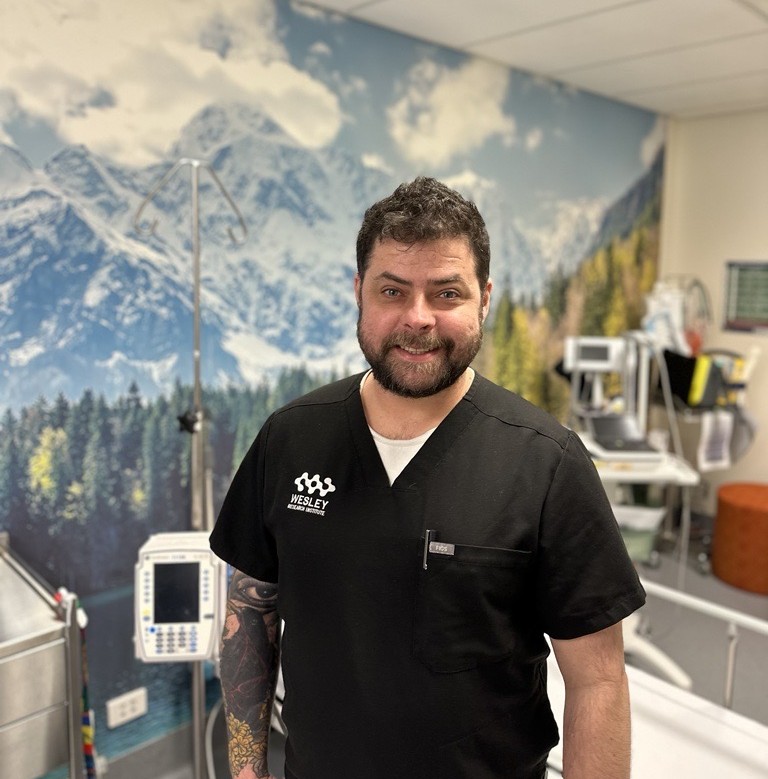
Behind every clinical trial is a team dedicated to improving patient outcomes, and Chris is one of the people at the heart of that mission. His journey from nursing into research has been driven by a desire to give patients access to new possibilities in care. In this Q&A, Chris reflects on his career, the patients who inspire him and the future of clinical trials.
Tell us about yourself.
I moved from Belfast to Australia in 1992 when I was six, and grew up in South‑Western Brisbane. Queensland is where I completed my nursing studies, and it’s where I’ve continued to grow my career. Over the years, I’ve built on my qualifications through ongoing professional development in clinical research, respiratory medicine, and clinical trial coordination. More recently, I’ve been focusing on expanding my knowledge in research governance and the evolving world of clinical trial practice — areas that have become a real passion for me.
What led you into clinical trials?
I began as an orderly at The Wesley Hospital in 2009, which eventually led to an interest in nursing. Having completed a Diploma of Nursing in 2013, I then spent around 10 years caring for patients across a range of acute and specialist healthcare settings. Over time, I became increasingly interested in how research could improve patient outcomes and provide access to innovative therapies. That interest naturally led me into clinical research, where I could combine patient care with evidence-based medicine and innovation.
My time at The Wesley Hospital was incredibly valuable in shaping my clinical skills and professional development. Working in a busy hospital environment taught me the importance of teamwork, communication, and patient centred care. It also exposed me to complex respiratory, neurological, urological and medical cases, which strengthened my interest in research and advancing treatment options for patients.
My dive into clinical trials was inspired by the opportunity to give patients access to emerging treatments that may not otherwise be available. Seeing how research can directly improve quality of life and contribute to future standards of care made clinical trials feel both meaningful and impactful.
What does a typical day look like for you as a clinical trial coordinator?
Every day is different, which is one of the things I enjoy most about the role. My day can involve coordinating patient visits, reviewing trial protocols, liaising with clinicians and sponsors, managing data and regulatory documentation, and supporting patients throughout their trial journey. A large part of the role is ensuring patient safety while keeping studies compliant and running efficiently.
My primary focus areas have included respiratory and chronic disease research, particularly studies involving conditions such as COPD, progressive neurological conditions such as Myotonic Dystrophy and ALS, as well as reproductive health.
How would you describe your role to somoene outside the industry?
I often describe it as being the link between patients, doctors, researchers, and sponsors. My role is to coordinate all aspects of a clinical trial to ensure it is conducted safely, ethically, and according to strict research guidelines, while also supporting patients every step of the way.
How has your role evolved since you first entered the field?
When I first entered clinical research, my focus was largely operational and patient-facing. Over time, my role has expanded to include greater involvement in study management, leadership, regulatory processes, and mentoring others within the research team.
How do you work wiht clinicians, researchers and patients to keep a trial running smoothly?
Communication and collaboration are essential. I work closely with clinicians and researchers to coordinate schedules, monitor patient progress, and ensure protocol requirements are met. With patients, it’s important to build trust, provide clear information, and ensure they feel supported and informed throughout the trial.
Can you describe the moment or experience that made you certain this was the right speciality for you?
One of the defining moments for me was seeing a patient experience a significant improvement in their symptoms and overall quality of life after participating in a clinical trial. Knowing that research could have such a direct and positive impact reinforced that this was the field I wanted to dedicate my career to.
The most rewarding moments are seeing patients benefit from a treatment or simply hearing that they feel better, more hopeful, or more supported because of the care and research process. Those outcomes make the work deeply meaningful.
What do you think makes a strong, effective clinical trial team, like the one at WRI?
A strong clinical trial team is built on collaboration, communication, trust, and a shared commitment to patient care. Successful teams combine clinical expertise with compassion, adaptability, and attention to detail, all while working toward the common goal of advancing healthcare through research.
What role do you play in supporting and advocating for patients during a trial?
Clinical trials can provide patients with access to innovative treatments and closer clinical monitoring, while also giving them hope and the opportunity to contribute to future medical advancements that may help others in the future.
A large part of my role is ensuring patients feel informed, safe, and supported throughout the entire process. I help guide them through study requirements, answer questions, coordinate their care, and advocate for their wellbeing at every stage of the trial.
Is there a particular patient story or sucess that has stayed with you?
One patient who underwent lung volume reduction treatment as part of a clinical trial experienced a remarkable improvement in their breathing and day-to-day quality of life. Seeing them regain confidence and independence was incredibly memorable and reinforced the value of the work we do.
How do you see the clinical trial landscape evolving over the next few years?
I think we’ll continue to see greater use of technology, more personalised medicine, and increased focus on patient-centered trial designs. There is also growing emphasis on improving accessibility and diversity in clinical trial participation.
I’m particularly excited about advancements in precision medicine, digital health technologies, and minimally invasive treatment approaches. These innovations have the potential to significantly improve patient outcomes and overall trial experience.
What advice would you give to someone considering a career in clinical trials?
Clinical research is a rewarding career for people who are organised, compassionate, and curious about advancing healthcare. My advice would be to stay open to learning opportunities, build strong communication skills, and always keep the patient at the centre of the work you do.
Learn more about our Clinical Trials Centre and the amazing team behind the work.