
Cardiovascular diseases remain the leading cause of mortality worldwide. While major advances have been made in population-level risk prediction and in therapies targeting traditional cardiovascular risk factors, translating detailed human heart biology into personalised diagnostic and treatment strategies remains a major challenge. In contrast to fields such as oncology, where tissue-based, spatially resolved molecular analyses increasingly inform clinical decision-making, cardiovascular medicine has only recently begun to integrate these approaches at scale.
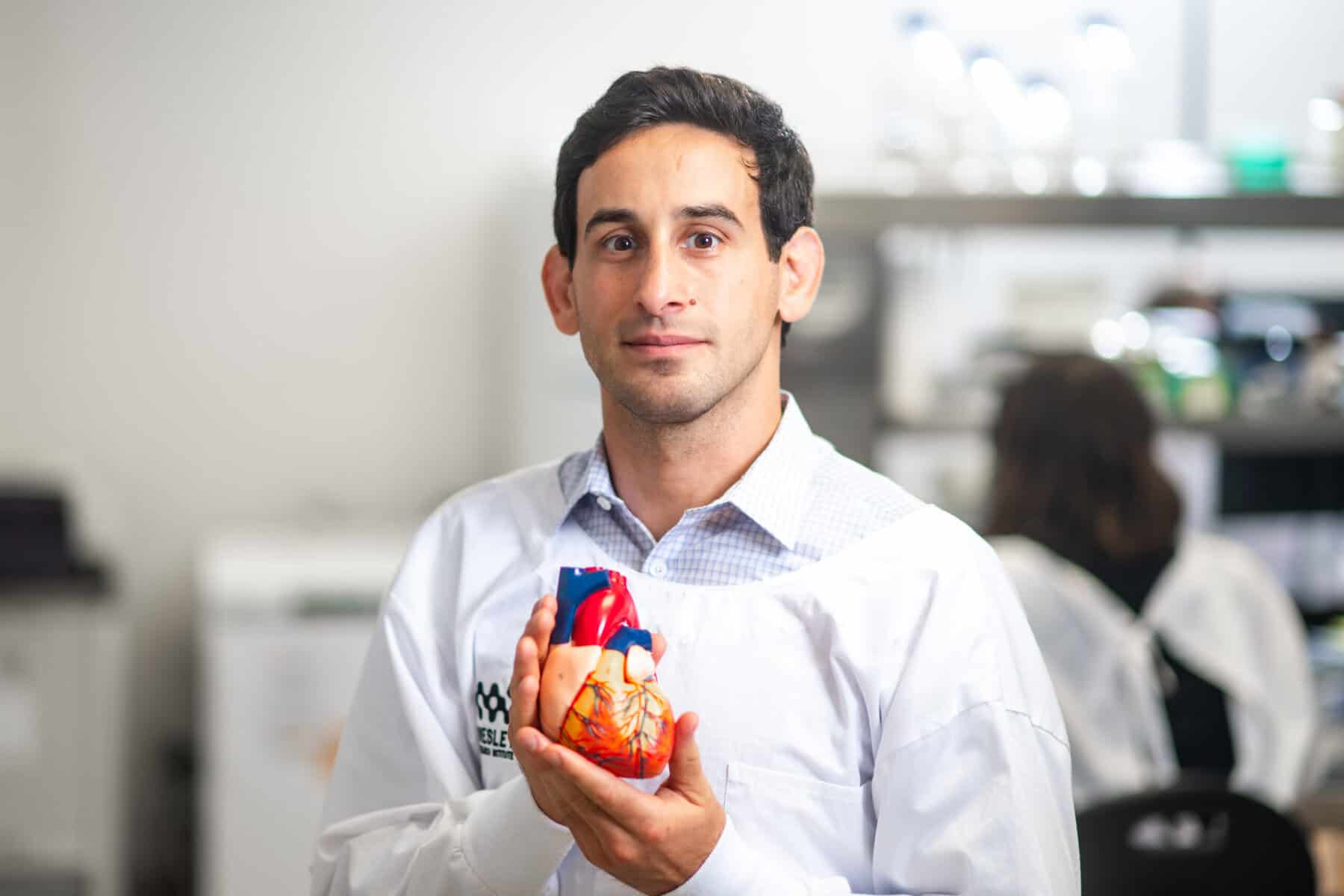
A new research program at Wesley Research Institute, led by Associate Professor Eliot Peyster, aims to bridge this gap by bringing unique human tissue models, advanced spatial biology analyses, and implementation-focused computational and ‘AI’ tools into cardiovascular research.
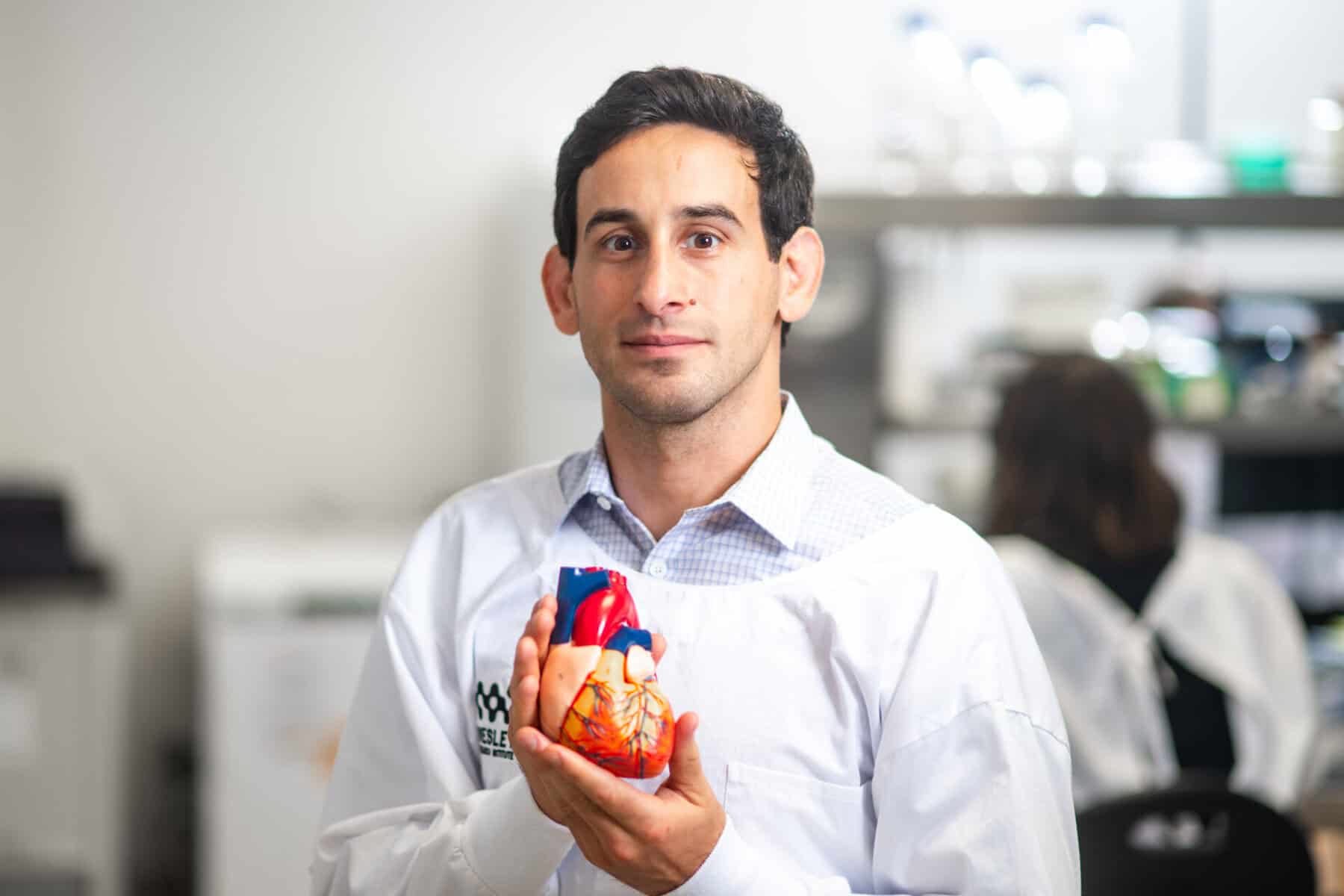
About Associate Professor Eliot Peyster
A/Prof Peyster is Director of Cardiovascular Translational Medicine at Wesley Research Institute. A clinician-scientist with a focus on heart failure and cardiac inflammation, he joined WRI in 2025 from the University of Pennsylvania in Philadelphia and is internationally recognised for developing and applying spatial tissue analysis and advanced computational approaches to study human cardiovascular disease.
Working in close collaboration with the Queensland Spatial Biology Centre (QSBC), and holding joint faculty appointments at The University of Queensland and the University of Pennsylvania, A/Prof Peyster’s program expands Wesley Research Institute’s capabilities in human tissue–based cardiovascular research, strengthens international translational partnerships, and focuses on converting complex biological data into clinically actionable tools.
At its core, the program represents a shift toward human-centric, tissue-resolved precision medicine in cardiovascular disease, with the goal of moving beyond one-size-fits-all treatment pathways. By integrating molecular, cellular, spatial, and clinical data, the program seeks to understand why patients with similar diagnoses experience dramatically different disease trajectories and treatment responses.
With research projects spanning heart failure, coronary artery disease, autoimmune and inflammatory cardiomyopathies, heart transplantation, and novel platforms for testing next-generation drugs and devices, A/Prof Peyster’s work aims to shorten the path from discovery to patient impact.
Closing the Precision‑Medicine Gap in Cardiology
Despite decades of progress, cardiovascular care still struggles to account for the enormous variability between patients. Two individuals with the same diagnosis may respond very differently to identical treatments, yet current clinical pathways rarely reflect this complexity.
A/Prof Peyster’s research program addresses this gap by leveraging advanced tissue imaging, spatial molecular profiling, and computational modelling to identify biological signatures that predict risk, treatment response, and disease progression at the individual-patient level.
Through this work, the program aims to determine:
- Which patients are biologically predisposed to develop progressive or treatment-resistant disease?
- Which therapies are most likely to be effective for a given patient?
- Who requires intensified monitoring, earlier intervention, or alternative treatment strategies?
By anchoring these insights in human tissue biology and longitudinal clinical data, the program lays the foundation for more precise, proactive, and effective cardiovascular care.
Why Traditional Models Fall Short
For decades, cardiovascular research has relied on in vitro systems, cell cultures (completed in laboratory settings), and animal models. While these tools have contributed valuable insights, they cannot fully replicate the complexity of human disease.
A/Prof Peyster’s work represents a significant shift: studying disease as it manifests in real patients. By analysing blood, tissue, and other clinical materials using state-of-the-art techniques, his team uncovers the true mechanisms driving cardiovascular conditions, providing insights that are essential for developing effective, personalised therapies.
A New Era Enabled by Technology, Data, and Human Biosamples
The convergence of computational power, technological innovation, and access to human biosamples has created an unprecedented opportunity to transform cardiovascular medicine.
A/Prof Peyster’s program capitalises on this moment by integrating multi-modal data – including spatial transcriptomics, proteomics, imaging, and clinical outcomes – using advanced computational and AI-enabled frameworks to identify clinically meaningful biological patterns.
By working directly with human tissues and biosamples, the program bypasses key limitations of traditional models and enables more accurate discovery of disease mechanisms, more reliable biomarker development, and faster translation into clinical tools.
This human-centric, data-integrated strategy accelerates the path from discovery to real-world implementation.
A Collaborative, Multidisciplinary Team
Spatial biology is a central pillar of A/Prof Peyster’s research program. This approach allows scientists to study human tissues in situ, preserving the spatial relationships between cells that are critical for understanding immune activation, tissue injury, and repair. Importantly, spatial biology enables high-value analysis of archived human tissue samples collected during routine clinical care, unlocking decades of under-utilised clinical material.
When paired with detailed electronic health records, clinical expertise, and advanced computational analysis, these samples form a powerful platform for large-scale, outcome-linked cardiovascular research.
The program leverages the expertise of the Queensland Spatial Biology Centre (QSBC) at WRI, which brings world-leading capabilities in spatial multi-omics, computational biology, and immunology.
A/Prof Peyster emphasises that modern translational science requires deep, cross-disciplinary collaboration. His team spans clinicians, biologists, engineers, and data scientists across multiple institutions, enabling the development of innovative diagnostic tools, predictive models, and experimental platforms for cardiovascular disease.
What This Means for Patients and Health Systems
The implications of this research program extend beyond scientific discovery, and is consciously focused on making tangible benefits for patients and healthcare systems.
For patients, the computational tools and translational tissue platforms advanced by the A/Prof Peyster’s program can enable earlier and more accurate risk identification, personalised treatment selection, and reduced exposure to ineffective or unnecessary therapies, and a more efficient paradigm for bringing novel therapeutics from the laboratory to the bedside.
For health systems, these innovations support more efficient use of resources, better targeting of high-cost therapies, and data-driven decision-making that improves outcomes while reducing waste.
By uniting human-centred biology, advanced analytics, and translational focus, the Cardiovascular Translational Medicine program at WRI aims to redefine how cardiovascular disease is studied, diagnosed, and treated.
We are grateful for the generous gift in Will that has made this important research program possible.
We look forward to sharing future discoveries as this program continues to advance.
Read more about recent advancements in this space, including a publication describing the first spatial map of immune activity in cardiac sarcoidosis.