
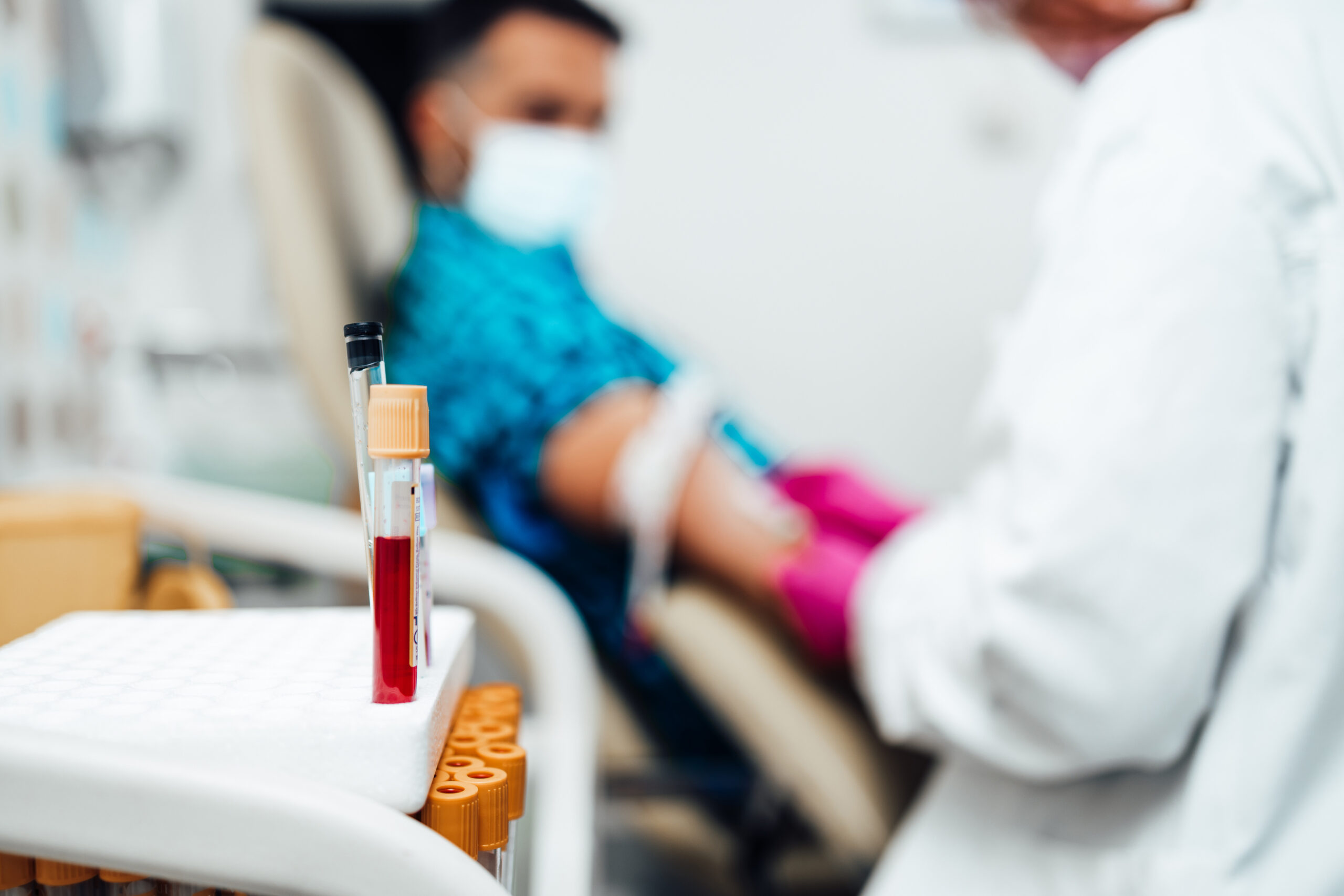
Researchers from Wesley Research Institute have identified a promising set of blood-based biomarkers that could transform how non-small cell lung cancer (NSCLC) is detected, monitored and treated, potentially reducing the need for invasive procedures and improving patient outcomes.
NSCLC is the most common form of lung cancer and remains one of the leading causes of cancer-related death worldwide. Early detection is critical, yet many cases are diagnosed at advanced stages when treatment options are limited and prognosis is poor. While low-dose CT scans are used to screen high-risk individuals, they can produce false positives, lead to overdiagnosis, and expose patients to repeated radiation.
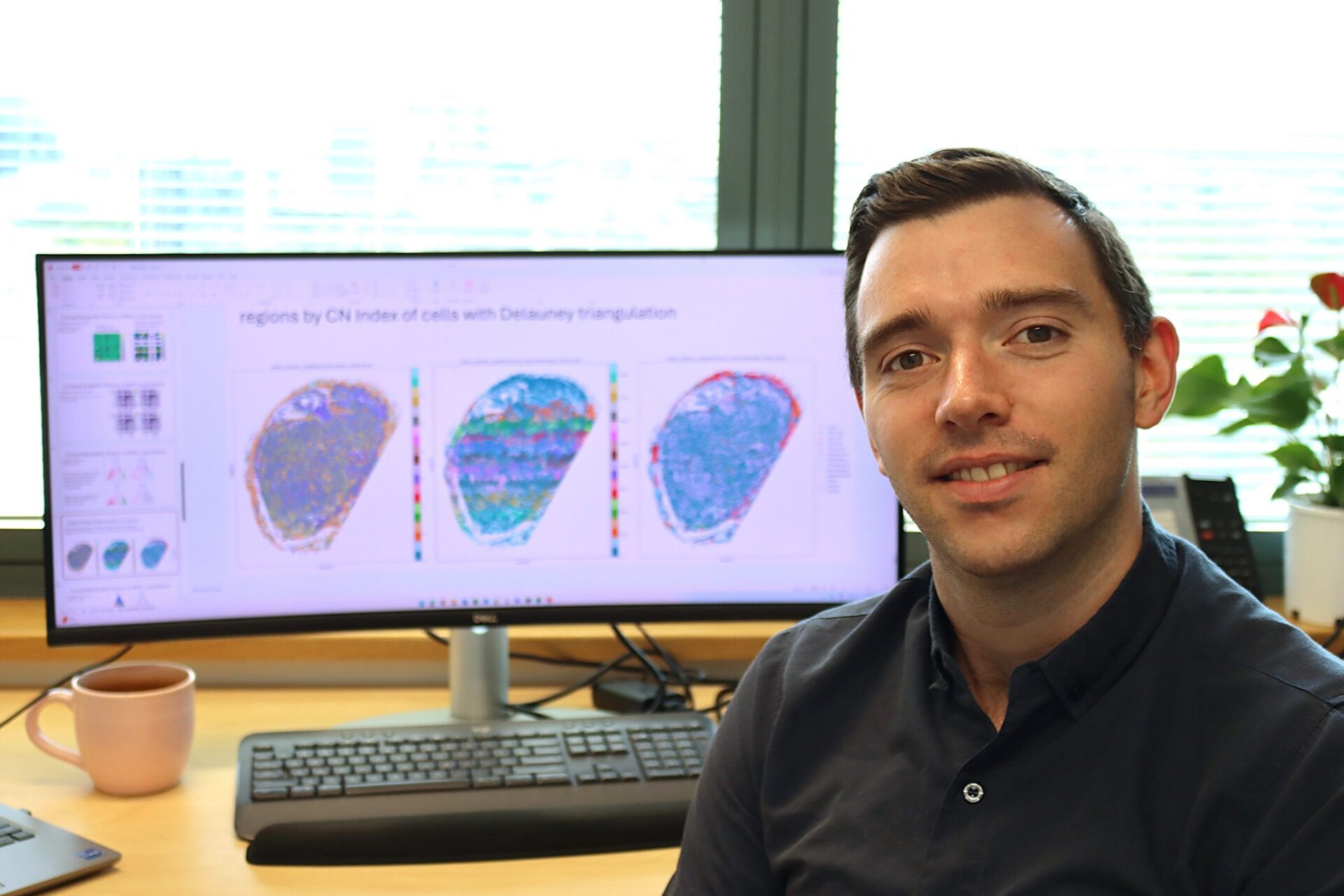
In a new international collaborative study co-led by Dr Aaron Kilgallon, a Data Scientist at the Queensland Spatial Biology Centre (QSBC), analysed blood samples from non-small cell lung cancer (NSCLC) at the time of diagnosis, including before and after surgery and immunotherapy. Using advanced discovery-based plasma proteomics technologies—SomaScan NULISA and nELISA,—the team measured thousands of circulating proteins to better understand how the disease and treatment responses are reflected at a molecular level.
A globally collaborative study, bringing together experts from SurgeCare in France, and Queensland-based researchers from Wesley Research Institute, The University of Queensland, and Queensland University of Technology, highlights the power and significance of international research partnerships.
The findings demonstrate that blood-based protein signals can provide valuable, real-time insights into tumour behaviour and immune system activity. Importantly, the study identified distinct protein patterns associated with treatment outcomes.
“In our study, we identified 21 proteins in the bloodstream that change in meaningful ways depending on how patients respond to surgery or immunotherapy,” states Dr Aaron Kilgallon. “Patients who remained cancer-free after surgery showed a distinct protein profile compared to those whose cancer returned.”
Patients who responded well to immunotherapy were also found to have lower levels of inflammatory proteins prior to treatment, suggesting their immune systems were already primed for a more effective response.
Associate Professor Arutha Kulasinghe, Scientific Director of the Queensland Spatial Biology Centre (QSBC) and Chair of Spatial Medicine, said the work represents a significant step toward more personalised care for lung cancer patients.
A simple blood test could, in the future, enable clinicians to assess whether a patient will respond to treatment or if their cancer is likely to return.
Associate Professor Arutha Kulasinghe
“By analysing proteins circulating in the blood, we can capture dynamic changes in both the tumour and the immune system, without the need for invasive tissue biopsies.”
The study also highlights the potential for blood-based biomarkers to support earlier diagnosis, improve risk stratification, and guide clinical decisions around surgery and immunotherapy.
Passionate about harnessing data-driven approaches to transform medicine and improve patient outcomes, Dr Kilgallon who is supported by the Harding Family Fellowship, believes next-generation healthcare will rely on precision data-driven insights to address growing clinical challenges. While the findings are promising, researchers note that further validation is needed before such tests can be implemented in clinical practice.
This is an important step forward, but discovering a biomarker is just the beginning. Our goal is to translate these discoveries into practical tools that can improve outcomes for patients.
Associate Professor Arutha Kulasinghe
This study was supported by the Frazer Institute (University of Queensland), Queensland Spatial Biology Centre (Wesley Research Institute), Cure Cancer, and The PA Research Foundation.
Yaghoubi Naei, V., Kilgallon, A., Mendes, G. et al. Dissecting non-small cell lung cancer (NSCLC) with blood proteomics—from surgical to immunotherapeutic responses. npj Precis. Onc. (2026). https://doi.org/10.1038/s41698-026-01469-z
Learn more about the study in this article featured in the Courier Mail.