
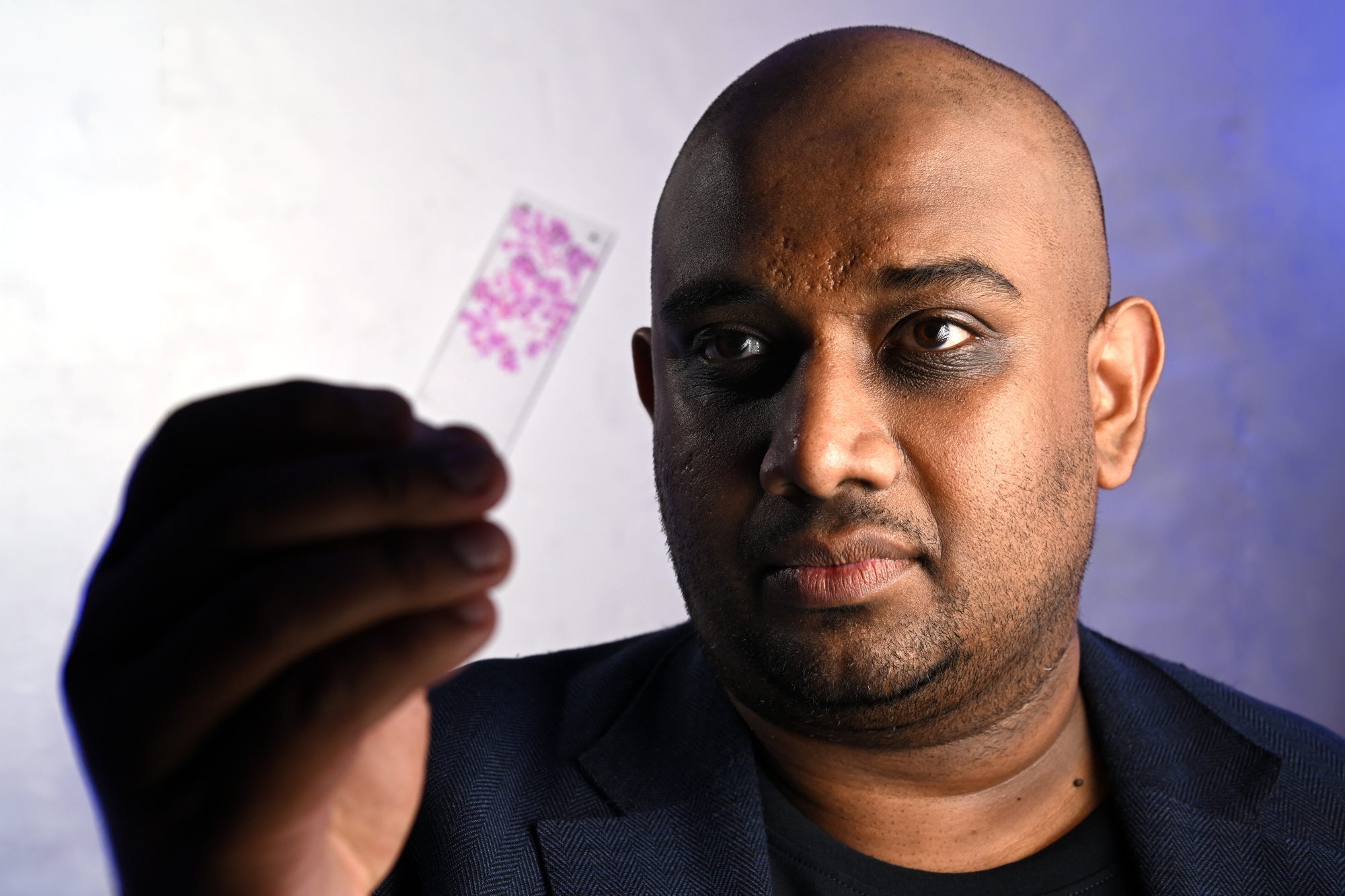
Associate Professor Arutha Kulasinghe, who leads the Queensland Spatial Biology Centre (QSBC) and holds the Brazil Family Chair in Spatial Medicine at the University of Queensland and Wesley Research Institute, uses spatial biology to map cancer one cell at a time, with the goal of matching every patient to the treatment that will work for them.
It was 2am in a hospital in Sri Lanka. A boy and his mother had been waiting outside the operating theatre when the surgeon came out carrying a stainless steel bowl.
Inside was a tumour the size of a football, taken from the bowel of Arutha Kulasinghe’s grandfather. The surgeon told them it was the biggest colon tumour he had ever seen.
Arutha was only 10. He had a watch with a camera in it and he took a photo.
“Even back then I loved technology. I was trying to understand what was going on,” he says. “I don’t know where that photo is now. I wish I did.”
He helped care for his grandfather until he died.
“It was an impressionable age,” he says. “Very early in my life, I understood what cancer could do.”
Early career in Brisbane
That experience drew him to cancer research. After completing honours in medical microbiology at the University of Pretoria, Arutha moved to Brisbane in late 2013 to start a PhD with the Queensland University of Technology at the Translational Research Institute, drawn by Professor Ian Frazer’s work on the Gardasil vaccine.
His PhD focused on liquid biopsies: finding cancer cells or fragments of tumour DNA in a blood sample. It produced more than a dozen publications and extensive industry collaborations. It also showed him the limits of that approach.
“Looking for biomarkers in the blood is like looking for a needle in a haystack,” he says. “Everything in me was telling me to go back to the tumour, to understand it with more detail.”
What is spatial biology?
In 2018, a new field was emerging. Until then, researchers mostly studied tumours by grinding them up, which lost the picture of how individual cells were arranged. Spatial biology keeps that picture. It shows where every cell sits inside a tumour, which cells are talking to which, and how the immune system is responding.
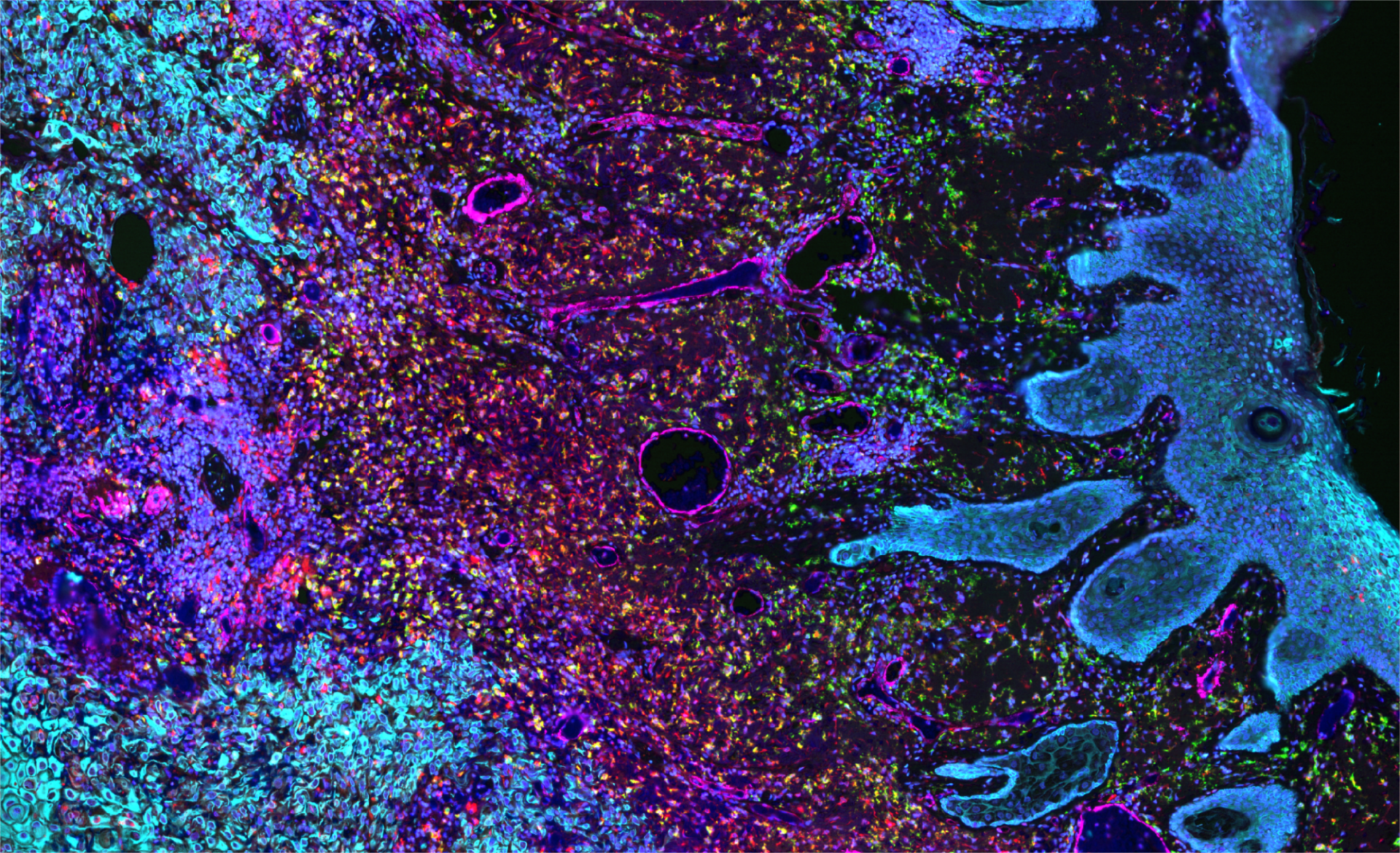
“I started looking at these images and I thought, this is so cool,” Arutha says. “Now you can see the tumour cells, you can see the immune cells, you can see where they’re communicating. We never understood the disease as it was found in the body.”
He won an NHMRC Peter Doherty Early Career Fellowship and set up his own lab at the Translational Research Institute.
A breakthrough during COVID-19
About six months later, COVID-19 arrived. Patients stopped coming in to give samples, and Australia had almost no cases.
Through Brazilian immunologist Professor Fernando Guimaraes, Arutha’s small team began receiving tissue from patients who had died of COVID-19 in Brazil, including lungs, hearts, brains and placentas.
“I thought, wait, hold on, we can actually do something here,” he says. “Everything we do is mapping cells in space, on hospital grade, pathology slides.”
Working with University of Queensland infectious disease expert Associate Professor Kirsty Short and Dr Chin Wee Tan from the Walter and Eliza Hall Institute, the team found that a gene called IFI27 was switched on in the lungs of COVID-19 patients. It had been seen in patients’ blood, but no one had shown it was coming from the lungs. The work was published in the European Respiratory Journal in 2022.
“I’ve never worked on a project like that before,” he says. “When a project gets difficult, I think about that one. It redefined for me how team science works.”
With intensive care specialist Professor John Fraser AO, the team went on to find DNA damage in the hearts of COVID-19 patients, something never reported in flu.
Building the Queensland Spatial Biology Centre
That partnership led to something bigger. The original idea was one instrument to push the science forward. Then the Brazil Family, working with Professor Fraser and Wesley Research Institute, asked a bigger question.
“They said, why don’t you build something bigger? It sounds like you can make contributions globally with what you’re doing. Why don’t you help this scale?” Arutha says.
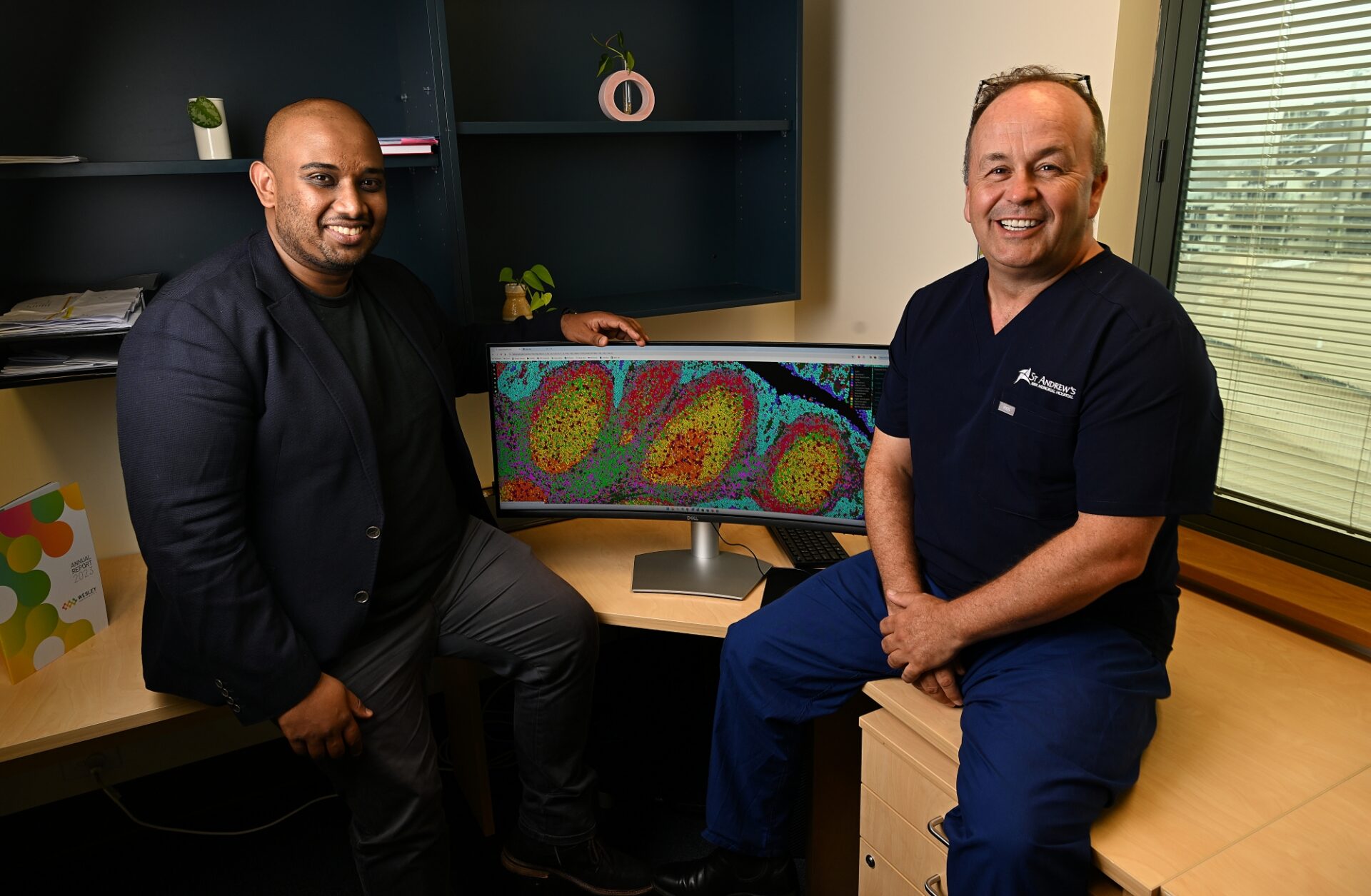
The result was the Queensland Spatial Biology Centre (QSBC), established at Wesley Research Institute in 2024 with five years of backing. It brings together instruments, scientists, clinicians and projects. In 2023 there was nothing like it in Australia.
“No one had done it before,” he says. “You’re trying to fly the plane while building it. Now it’s mature technology, and everyone wants to collaborate.”
QSBC’s research covers lung, head and neck, breast, ovarian and skin cancers, as well as infectious disease. The team has grown from two people to about 30 staff and students across two sites.
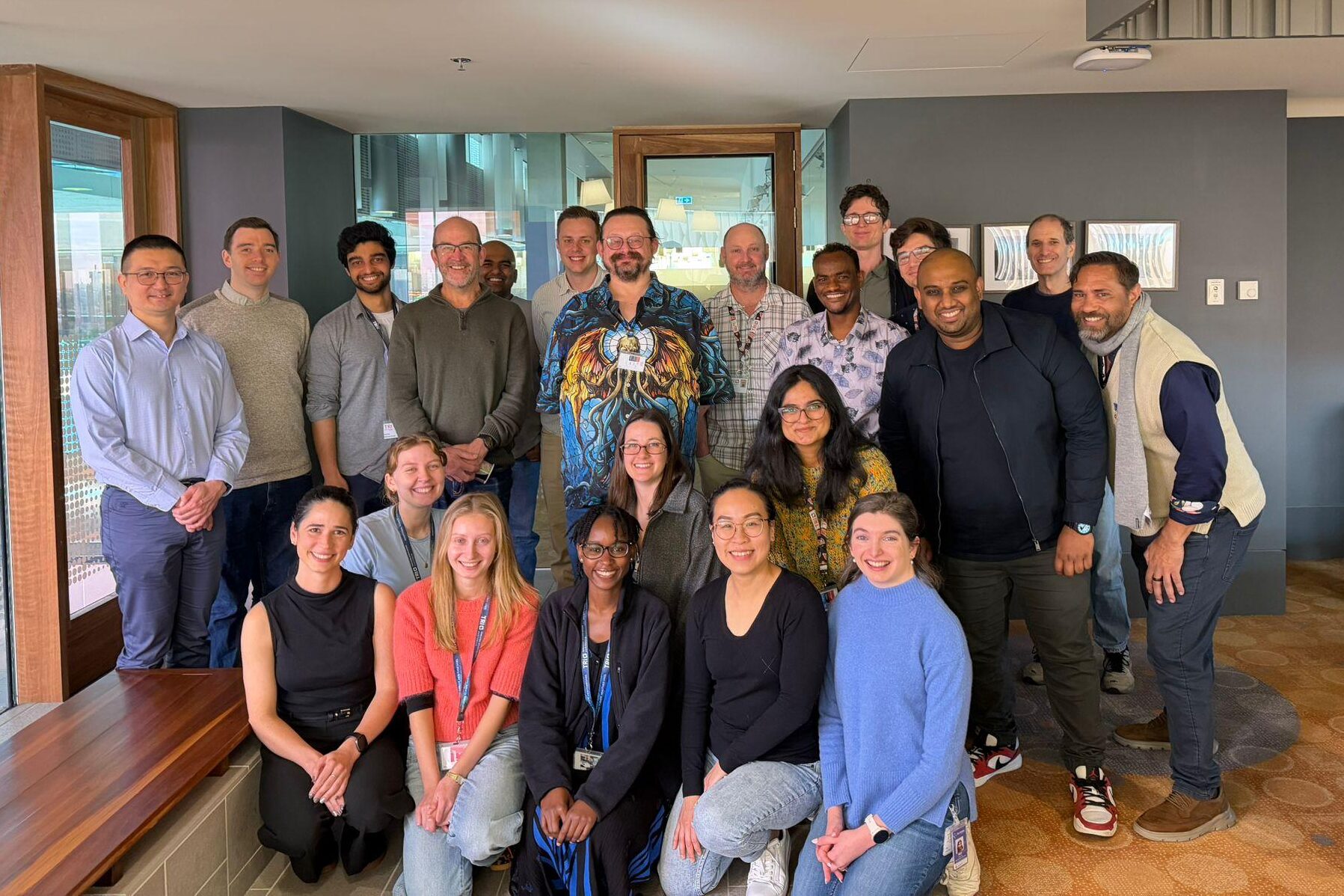
Its strength is not the machines, but the people who make sense of the data.
“You put a slide on an instrument, it goes ping, and a couple of days later you get the data,” he says. “But it can take three to five years to understand what you’ve generated.
You need a pathologist, an immunologist, a biostatistician, a bioinformatician, a data scientist and a medical oncologist. We’ve built that team and continue to do so. We can interpret this data in a couple of months. That’s what I’m proudest of.
A/Prof Arutha Kulasinghe
Career Highlights
| Year | Highlight |
| 2022 | COVID-19 lung study published in the European Respiratory Journal |
| 2024 | $1.996 million Medical Research Future Fund grant for lung cancer research |
| 2024 | Queensland Spatial Biology Centre established at Wesley Research Institute |
| 2025 | Nature Genetics paper with Yale School of Medicine, identifying a tissue signature that predicts which lung cancer patients will respond to immunotherapy |
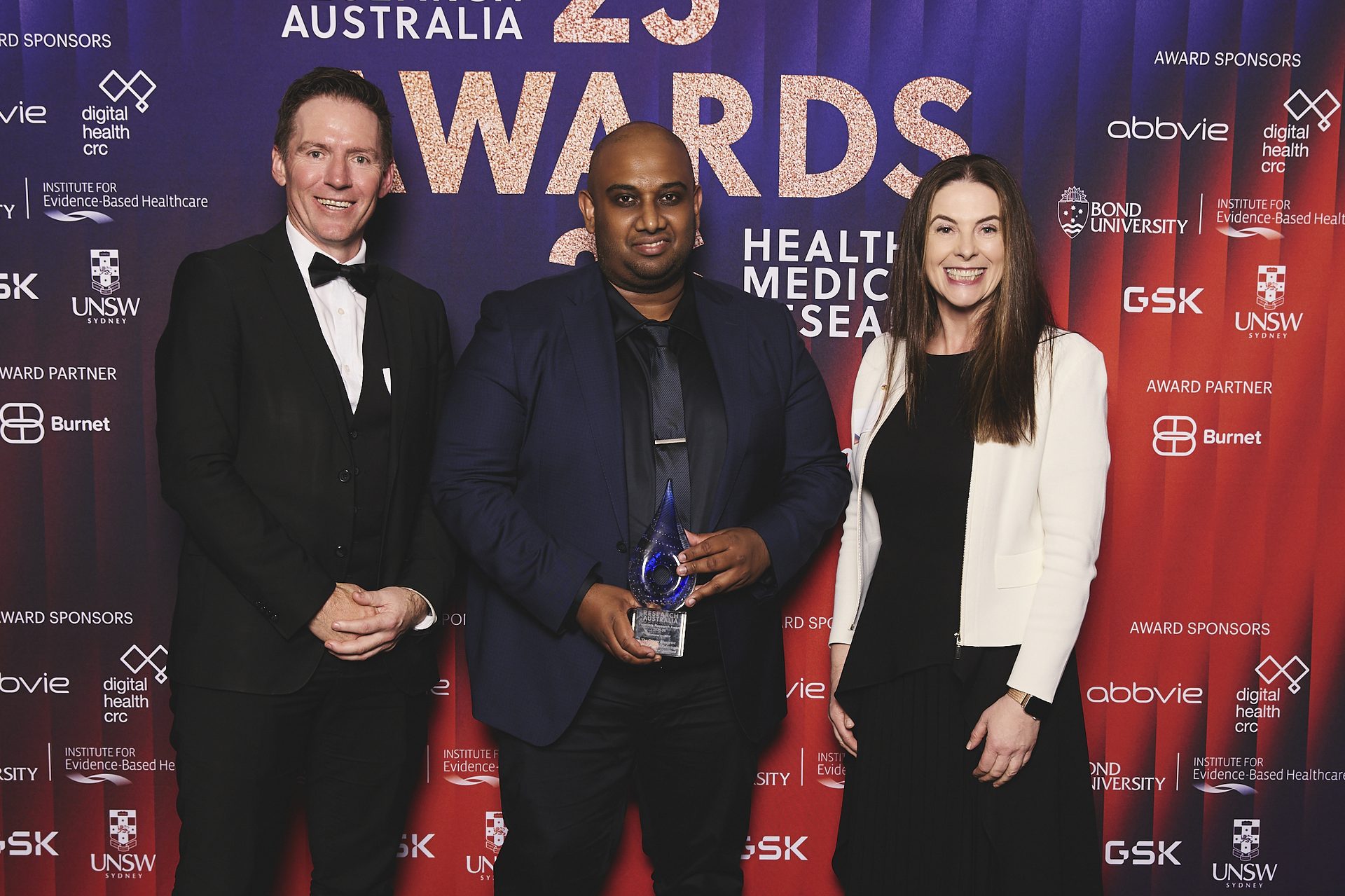
| 2026 | Frontiers Research Award, Research Australia’s Health and Medical Research Awards |
Of the Frontiers award, he says: “When you see the people and the quality of work in Australia, I was just grateful to be there.”
Leading the next generation
Arutha describes his leadership style as servant leadership.
“If I can bring in people around me who are smarter and think differently to me, we’ll create breakthroughs we couldn’t otherwise individually reach,” he says.
Two of his students, mathematician Cooper Janke and pathologist Kidane Embaye, sit side by side.
“They’re learning from each other, almost learning to speak each other’s languages,” he says. “My job is to bring those people together, create an environment where they can innovate, then take a step back and see what they can do. That’s where the magic happens.”
The Brazil Family Chair in Spatial Medicine
The Brazil Family Chair in Spatial Medicine at the University of Queensland and Wesley Research Institute has given Arutha’s team something rare in Australian medical research: time.
The Brazil Family Chair in Spatial Medicine, which has been created with the support of Wesley Research Institute and the Brazil Family, will harness cutting-edge technology to create digital cellular “maps” of patient samples, combining biology, data and computing to design highly targeted treatments that could dramatically improve outcomes for people with cancer, cardiovascular disease and beyond – positioning Queensland as a global leader in this life-changing field.
“Normally you have to bring in your own salary, your team’s salaries and the project money, so we’re on a constant hamster wheel,” he says. “The Chair gives us sustained funding, with a runway of four to five years to go deep into our science and medicine.”
That support is funding new studies in breast and head and neck cancer, and training the next generation of scientists.
If we could cure cancer with just money, we would have done it already,” he says. “What we need are people who think differently, from different walks of life, working together for ’team science’ to make new discoveries.
A/Prof Kulasinghe
The future of precision medicine
Precision medicine means giving each patient the treatment that will work for their disease. Arutha believes it is finally within reach.
Today is probably one of the most exciting times for precision oncology. Rather than giving patients a drug that works in 20 or 30 per cent of people, can we find a personalised therapy for each individual? I think that’s possible today.
A/Prof Arutha Kulasinghe
Artificial intelligence will speed this up through the “virtual patient”, which uses thousands of digitised patient journeys to predict how a new patient will respond to treatment.
“That’s not 10 years away. It’s already happening,” he says. “I’m really excited that our lab will be contributing.”
Full circle
What would his grandfather make of his work today?
“I think he’d be proud,” he says. “Proud that I’ve taken a bet, I’m following my passion and giving it a crack.”
“A colon cancer patient treated in the next 10 years will have a very different outcome to how his journey went,” he says.
I think he’d be excited that future patients will have better survival, better outcomes, and hopefully live with their cancer and not die of it.
A/Prof Arutha Kulasinghe
Support this research
Wesley Research Institute is an independent, non-profit medical research organisation. Philanthropic support, like the Brazil Family’s, gives researchers such as Associate Professor Kulasinghe the time and resources to make discoveries that change patient care.
Learn more about how you can support the future of precision medicine.