
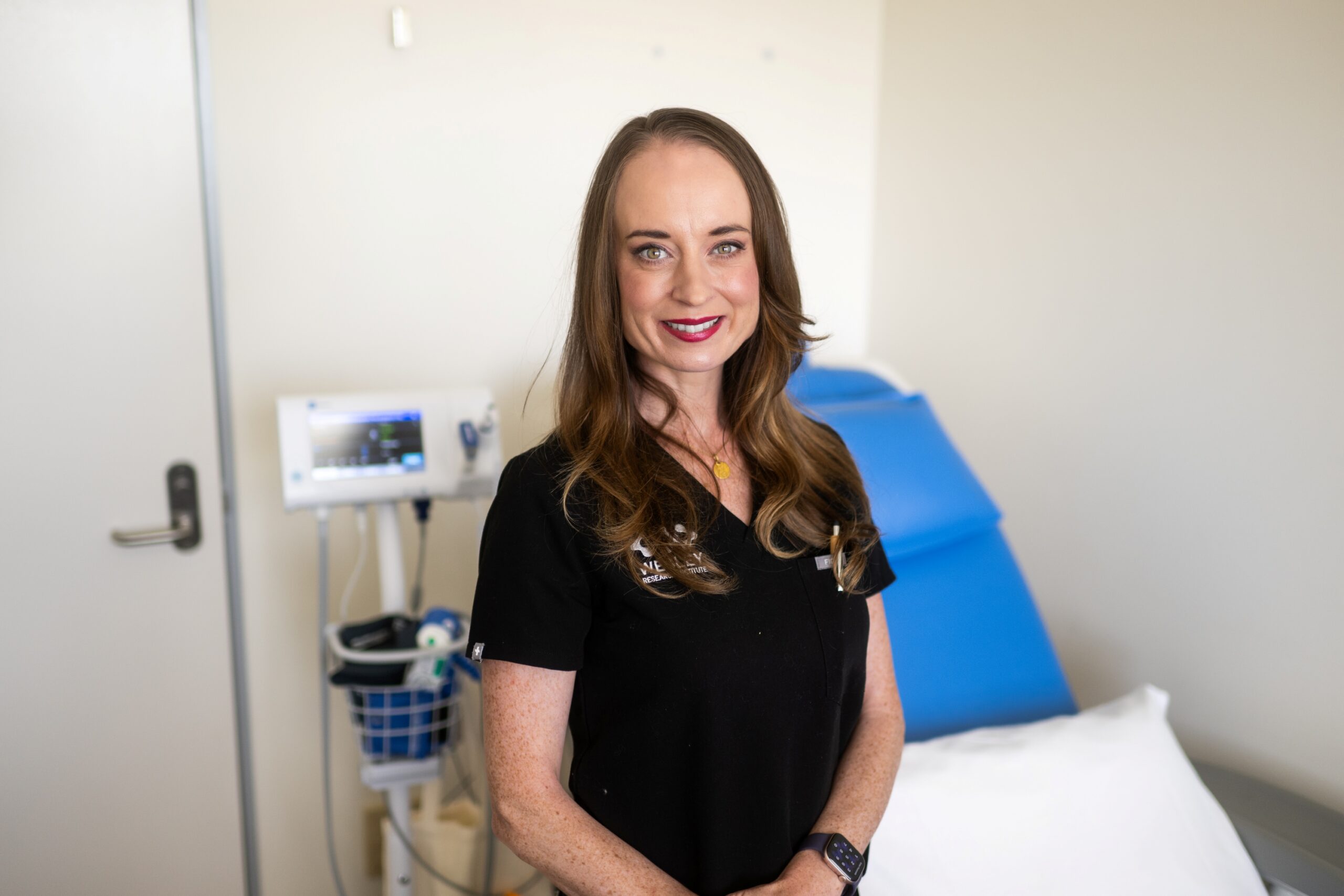
Originally from Tasmania, Linda brought her passion for both cardiology and research to Brisbane when she joined Wesley Research Institute in 2023 as a Cardiovascular Clinical Trial Coordinator. With a background as a cardiac nurse working in high-pressure catheterisation labs, she developed a deep appreciation for the life-saving impact of interventional cardiology.
Now, Linda plays a central role behind the scenes of complex clinical trials, helping to bring new treatments from research into real-world care. Her journey into clinical trials was shaped by a strong academic foundation, hands-on clinical experience, and a drive to contribute to better patient outcomes. In this interview, she shares what led her into the field, what motivates her work, and what it takes to coordinate cutting-edge cardiac research.
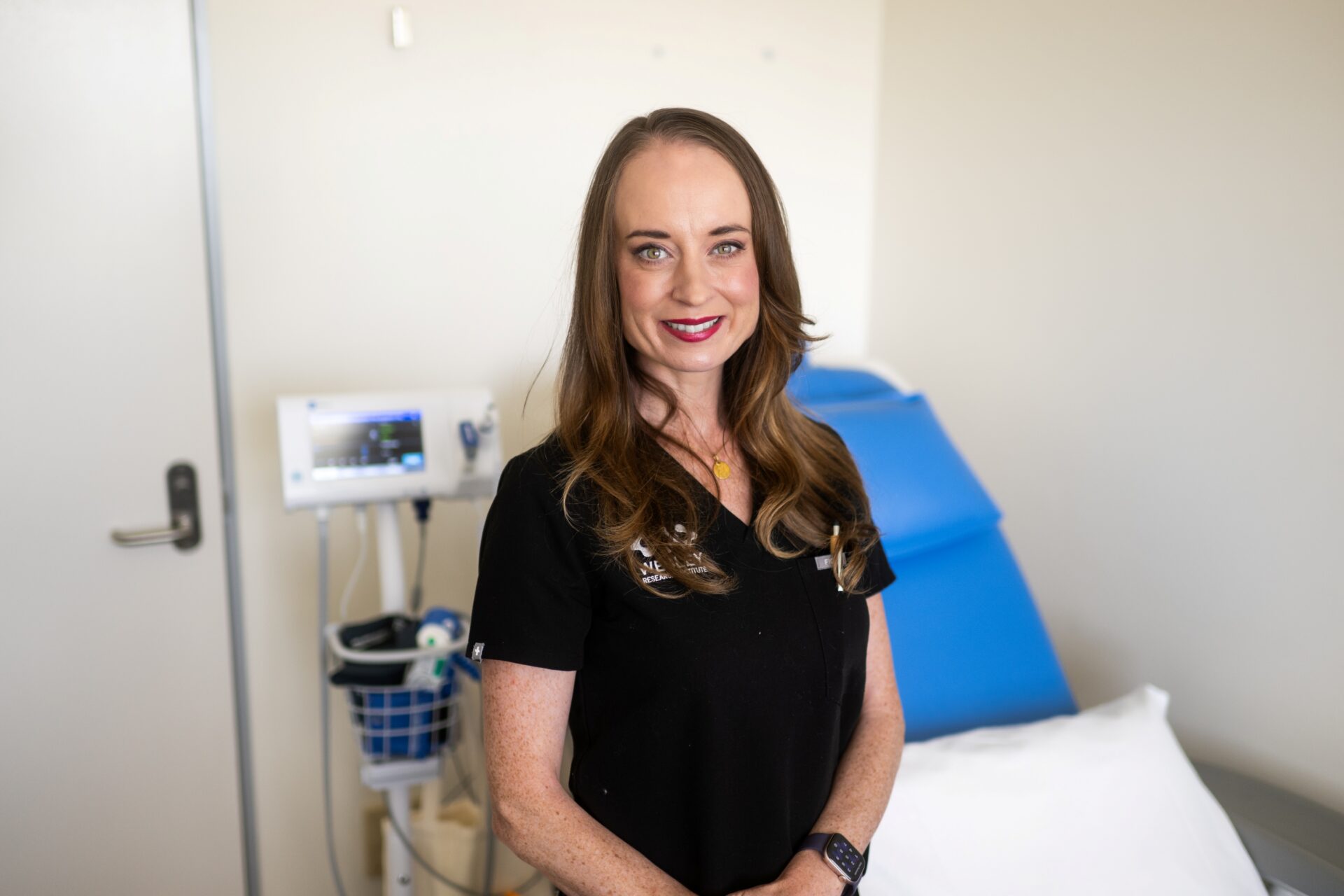
What led you into clinical trials?
During my university training in Tasmania, I always enjoyed and excelled in the research units of the BN and went on to complete a research scholarship and my Honours thesis. I was awarded First Class Honours for my research exploring nurses’ participation in patient resuscitation.
During my graduate year as a nurse, my first nursing position was in the cardiac catheterisation laboratory in Launceston. Where I developed a strong appreciation for the technical and highly specialised nature of Interventional Cardiology and worked with an exceptional team of clinicians, helping me to excel in my role. While working full-time as a new graduate, I also completed my honours thesis full time, so I was always thinking about research.
I eventually moved to Brisbane to escape the cold and commenced a role in the cardiac catheterisation laboratory of a major tertiary hospital. I loved the complexity and technical demands of the role, but I was seeking a position that offered a greater work-life balance to enjoy the sunny Queensland lifestyle. Clinical research allowed me to combine my interest in complex cardiac care within a more sustainable environment, without the late nights and on-call demands.
Wesley Research Institute recognised my background and potential, and I was given the opportunity to coordinate their cardiac clinical trials, for which I remain grateful.
What interested you specifically in working in cardiac clinical trials?
I’m all heart! I have always had a strong interest in cardiology. During university, my assignments always had a cardiac focus wherever possible. I was and still am fascinated by the complexity of the heart and skill required to treat cardiac disease. I had so much respect (and still do) for the nurses and doctors working in cardiology who were able to intervene in some of the most time critical and lifesaving situations.
There are moments that stay with you. I never expected to find myself scrubbed during a STEMI (major heart attack), working shoulder-to-shoulder with an interventional cardiologist (many times in the middle of the night) and knowing that the intervention we were delivering was the difference between life and death. That experience gave me a deep appreciation for how specialised cardiac teams, supported by research can dramatically change outcomes for patients.
Treatments we now consider routine would not exist without clinical trials. Advances that allow patients to be treated through minimally invasive procedures, rather than major open-heart surgery, are a direct result of decades of cardiac clinical trials.
Now working predominantly in structural heart and TAVI clinical trials, and I still find the work fascinating because of the complexity and life-changing impact it has for patients. Through both critical care and research, I have been lucky enough to help “fix broken hearts” through cardiac research.
What does a typical day look like for you as a Cardiac Clinical Trials Coordinator?
There isn’t a typical day, which is one of the defining features of the role. The work is dynamic and requires constant critical thinking, prioritisation and problem-solving skills to keep complex trials running safely and effectively.
The role is central to strict adherence to complex study protocols. My day might include seeing patients, coordinating investigations, reviewing clinical reports, and collecting data during procedures. Alongside this, I manage sponsor communication, respond to data queries, maintain regulatory documentation, and ensure all trial activities comply with ethics approvals and Good Clinical Practice.
Patient care is central to everything we do. We advocate for them, coordinate their schedules, ensure they are fully informed, and support them through what can be complex treatment pathways. Much of the role happens behind the scenes and involves balancing competing demands. At any given time, I may be liaising with sponsors, monitors and clinicians across different time zones, while problem-solving logistical challenges and anticipating what might happen next without a crystal ball. All of this happens simultaneously, across multiple studies. It requires strong clinical judgement, organisation, time management, and the ability to manage multiple “high-priority” tasks at once.
What skills have been most important in your role as a nurse in clinical trials?
Sometimes it feels like being in six places at once. Strong clinical judgement and critical thinking are essential, particularly when working with complex protocols and making decisions that affect patient safety. While ultimate responsibility sits with the Primary Investigator, clinical trial coordinators need to know what can be managed independently and what must be escalated.
Problem-solving and time management are key when balancing multiple studies and competing priorities. Clinical knowledge in my specialty area allows me to assess patients, interpret reports and recognise when safety concerns need to be escalated. A solid understanding of Good Clinical Practice (GCP) and how it fits alongside nursing skills and clinical care, is also essential. Being able to switch focus quickly, manage multiple priorities, and respond calmly to change is also a key part of the role.
How do you work with patients throughout their involvement in a clinical trial?
For patients taking part in a trial, clinical trial coordinators are often the main point of contact. From the very beginning, I make sure patients and their loved ones have the time and space to understand what trial participation involves, talking through informed consent, schedules and questions at their pace. Supporting patients to make informed decisions they feel comfortable with is a key part of my role.
Throughout the trial, I coordinate their appointments, perform assessments and remain a consistent point of support. Patient advocacy is a key part of the role. We escalate concerns when needed, support them through complex care pathways, and ensuring their wellbeing remains central to everything we do.
Many trials can run for up to ten years and over that time, you naturally build a strong professional relationship with patients, and often with their families as well. Supporting patients across different stages of their treatment and life, and making sure they feel supported, informed, and comfortable to continue in a study, is one of the most rewarding aspects of the role.
For nurses who are interested in working in clinical trials, what advice would you give?
Clinical Trials can be a rewarding career for nurses who value flexibility, variety, and a more predictable routine, while still being clinically involved. It offers a good work-life balance and still uses your nursing skills, critical thinking and judgement every day.
There isn’t a clear or formal pathway into the role. Most people enter the role through persistence, curiosity, and on the job learning. My advice would be to connect with CTCs in the hospital, ask questions, and learn what the role involves.
Research roles can sometimes be misunderstood in busy clinical environments and make people hesitant. But at its core, the role is about patient safety and supporting better treatment options through evidence-based practice.
If you’re curious, don’t be afraid of the unknown. Ask questions, seek out opportunities and keep an open mind. It’s a highly skilled nursing role and we’re here to stay.
What do you hope the future looks like for a clinical trial coordinator role?
As clinical trials continue to evolve, the work of the CTCs has become much more complex. Protocols are tighter, timelines are less forgiving, regulatory expectations are higher, and digital systems and AI are now part of everyday practice. Much of that responsibility sits with the CTC.
I hope the future brings formal recognition of the role as a specialised, skilled profession, with education and career pathways that reflect what the job actually involves. Short GCP courses and learning on-the-job aren’t enough anymore for a role that sits at the centre of patient safety, protocol execution, data quality, and keeping studies on track.
While other trial professionals are clearly named, defined, and understood, the coordinators are often the ones quietly holding everything together behind the scenes. Fixing problems before they escalate, adapting when plans change and making sure trials continue to run. Despite that, the role is still widely misunderstood, inconsistently named, and easily overlooked.
Better visibility, education, and recognition of CTCs is essential for safe, high-quality, and sustainable clinical research.
Learn more about cardiovascular clinical trials at Wesley Research Institute.