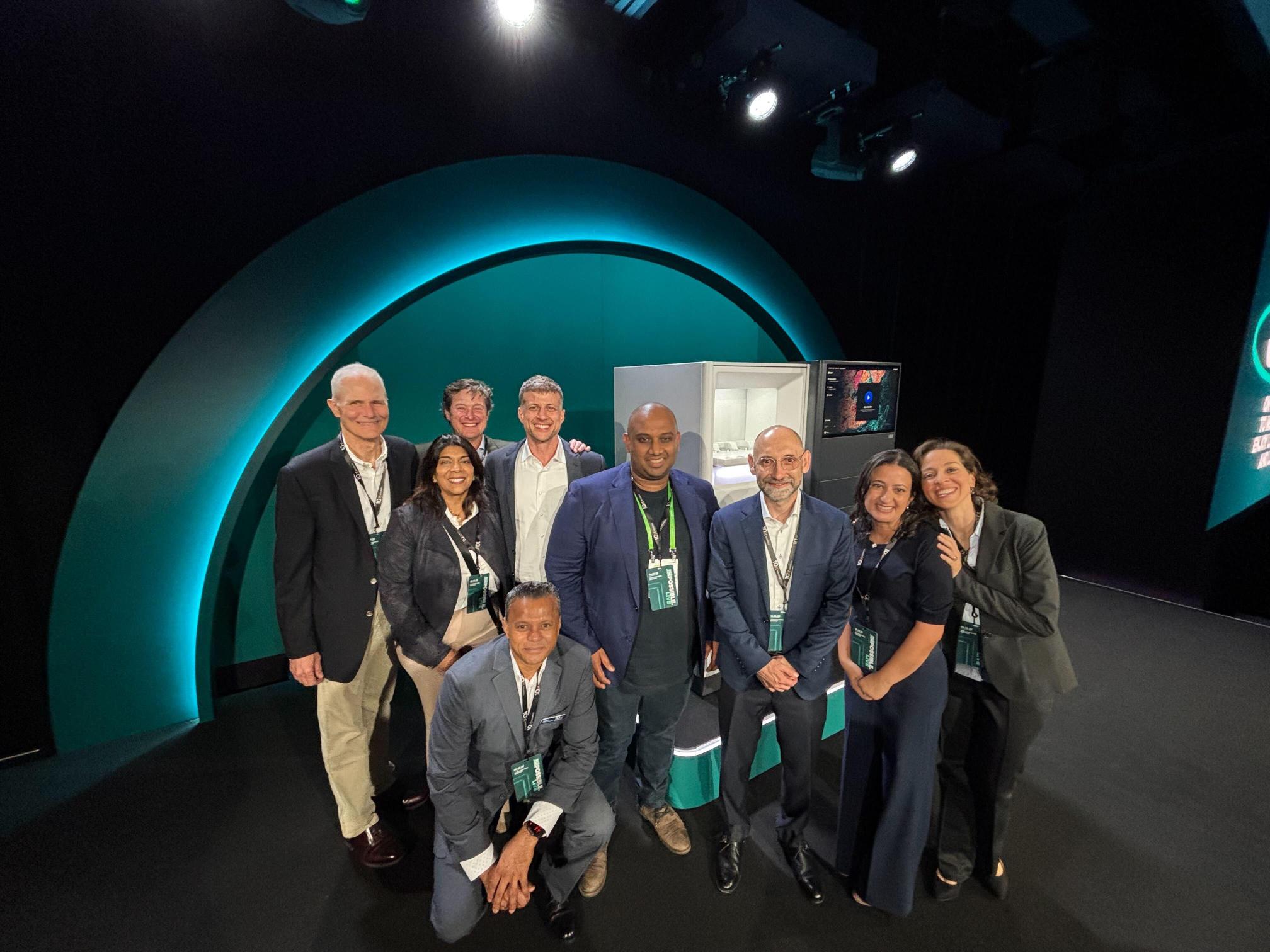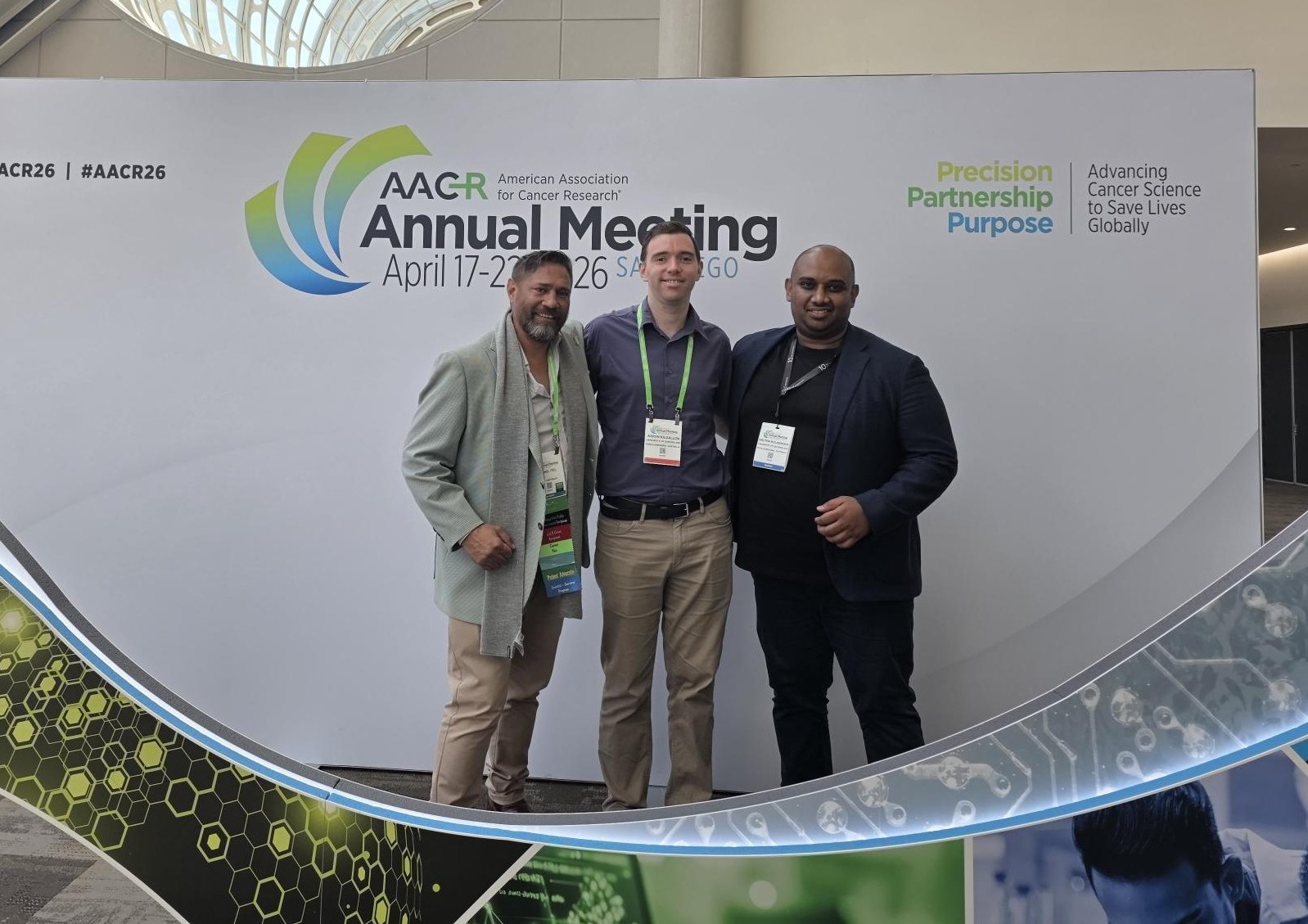
This week, researchers from the Queensland Spatial Biology Centre (QSBC) were presenting at the 2026 American Association for Cancer Research (AACR) Annual Meeting in San Diego, the world’s largest and premier cancer research conference. With over 23,000 delegates from across the globe, AACR is where the international cancer community converges to share breakthroughs, challenge thinking, and shape the future of cancer research.
By presenting cutting-edge tissue and blood biomarker research alongside leading institutions from Europe, North America, Asia, and beyond, QSBC researchers showcased the strength and global relevance of Queensland-led cancer research.
A Global Hub for Innovation in Cancer Research
The AACR Annual Meeting is widely regarded as the critical driver of progress against cancer worldwide. It brings together scientists, clinicians, healthcare professionals, patients, survivors, and advocates to exchange the latest discoveries across the entire cancer research spectrum — from population health and prevention to cancer biology, translational research, clinical trials, survivorship, and advocacy.
Blood Biomarker Studies for Lung Cancer: Dr Aaron Kilgallon
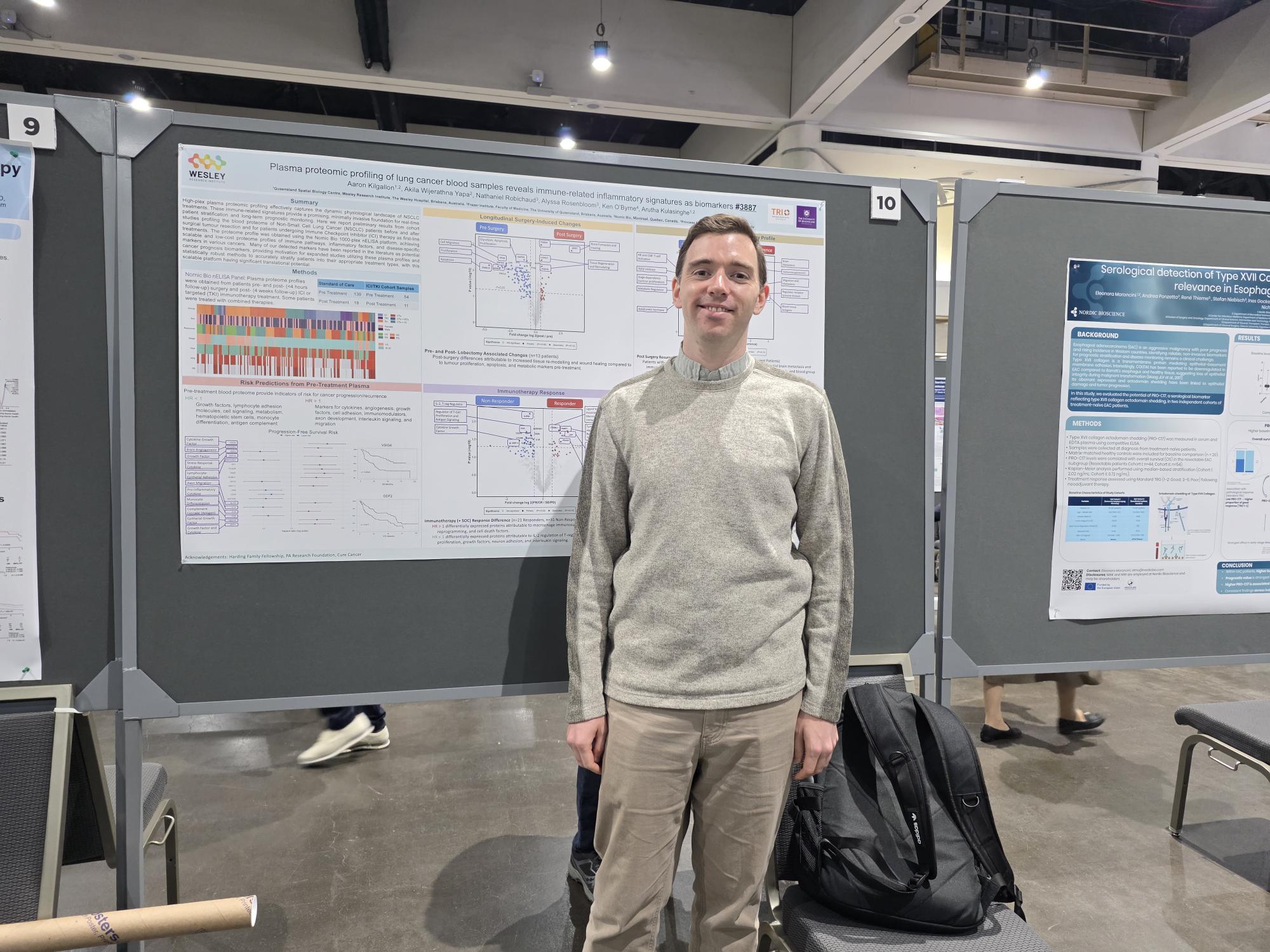
Dr Aaron Kilgallon, QSBC Research Officer, brought his expertise in spatial biology, machine learning, and data science to the international stage.
Passionate about harnessing computational approaches to revolutionise medicine, Dr Kilgallon presented a spotlight talk entitled “Quantifying Non-Small Cell Lung Cancer using Precision Blood Proteome Measurements,” focused on identifying blood-based biomarkers for non-small cell lung cancer — work with potential implications for diagnosis and treatment selection.
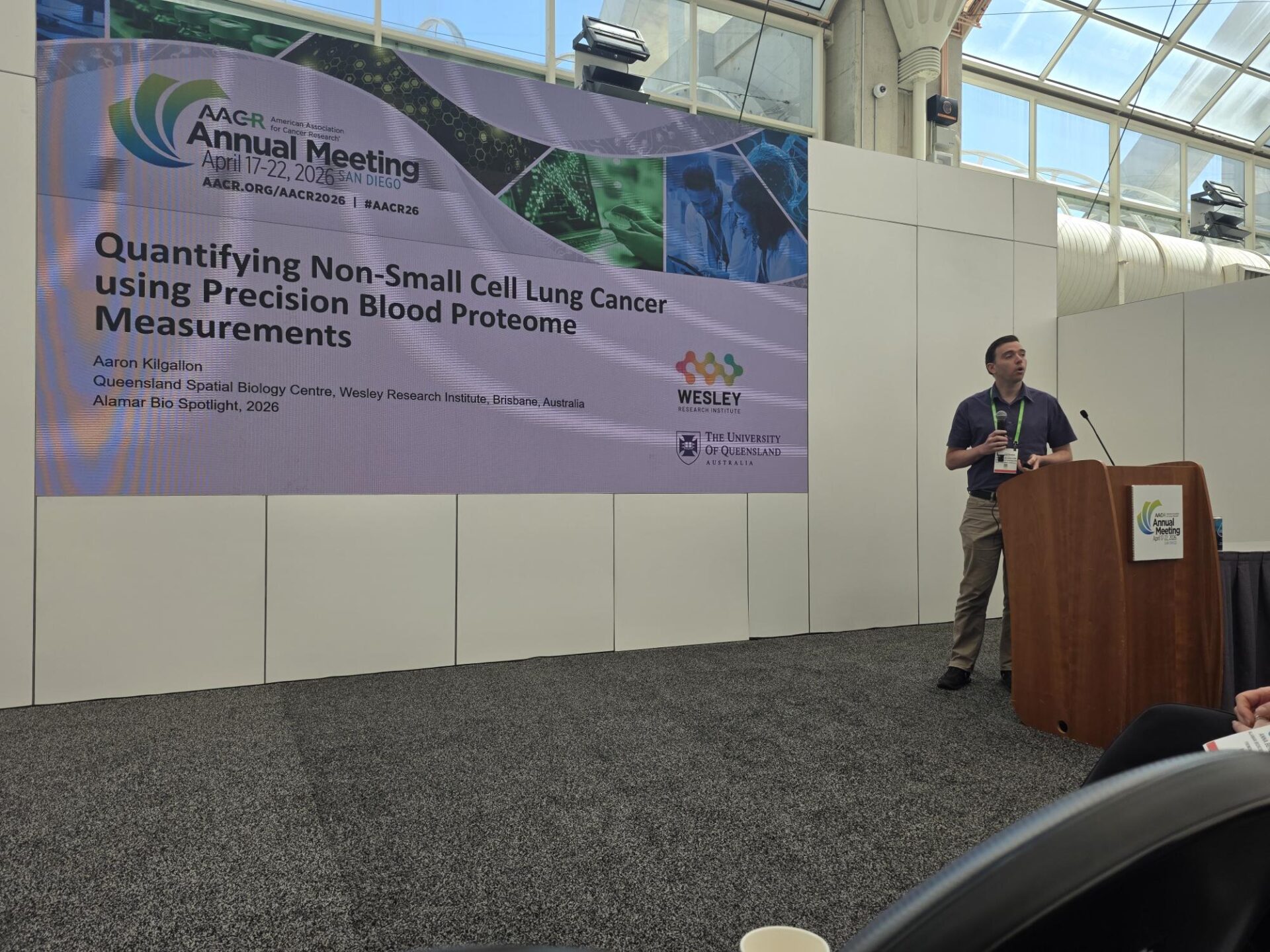
The research identified immune-related inflammatory signatures in blood plasma before and after tumour resection surgery or immunotherapy treatment, offering promising insight into how plasma profiling could be used internationally to:
- Monitor treatment response in real time
- Stratify patients for appropriate therapies
- Improve precision approaches to lung cancer care
Future studies aim to refine these plasma profiles in combination with tissue diagnostics to better guide treatment decisions — a step that could influence clinical pathways far beyond Queensland.
It was a pleasure for me to present our findings at the AACR conference and highlight the impact of the QSBC on advancing precision medicine. We hope that presenting our findings at a global stage has sparked meaningful dialogue in the oncology community towards supporting future studies on using blood proteomics as treatment biomarkers.
Dr Aaron Kilgallon
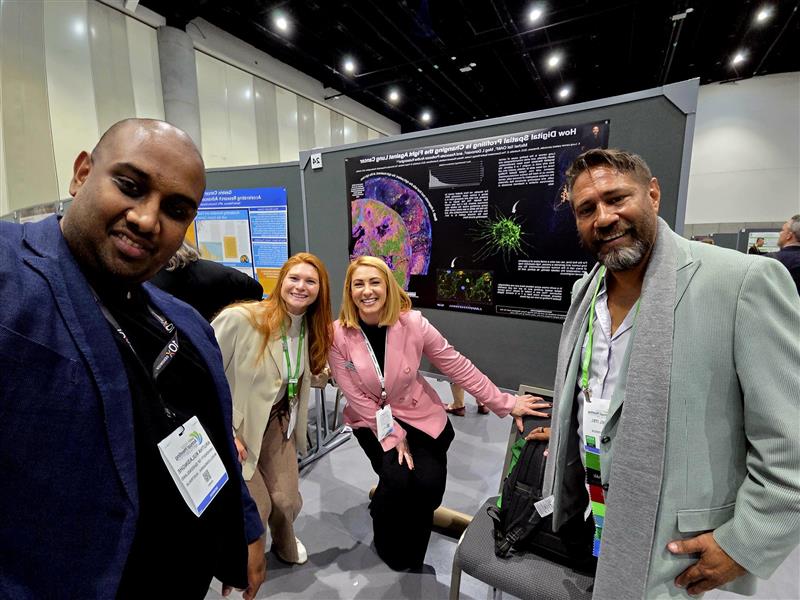
“The energy and enthusiasm of the researchers and clinicians at the conference was second only to patient advocate Michel Itel, who embodied the spirit of passion and discovery in engaging with both the science and the patient experience in cancer research.”
Driving Spatial Medicine Forward: Associate Professor Arutha Kulasinghe
Associate Professor Arutha Kulasinghe, Chair of Spatial Medicine at the Wesley Research Institute and The University of Queensland, and Scientific Director of QSBC, also delivered impactful presentations highlighting Queensland’s leadership in spatial biology and tissue intelligence.
In his spotlight talk, “Powering clinical decisions with tissue intelligence”, Associate Professor Kulasinghe demonstrated how high-dimensional spatial proteomics and advanced image analytics are transforming how clinicians understand and interpret tumour biology.
The team presented a series of posters spanning spatial biology investigations of aggressive breast cancer and advanced-stage lung cancer.
By characterising immune cell populations, functional annotations, and metabolic activity at the tumour–stroma interface, this work contributes to a growing global effort to develop more precise, biology-driven cancer treatments.
AACR is one of the best meetings in the world, the breadth and depth of topics covered with a collective goal of better patient care unites the global cancer community with one shared mission.
Associate Professor Arutha Kulasinghe
The Global Voice of Lived Experience
QSBC researchers were joined by lung cancer advocate Michel Itel OAM, whose presence reinforced the importance of patient voices in shaping international cancer research.
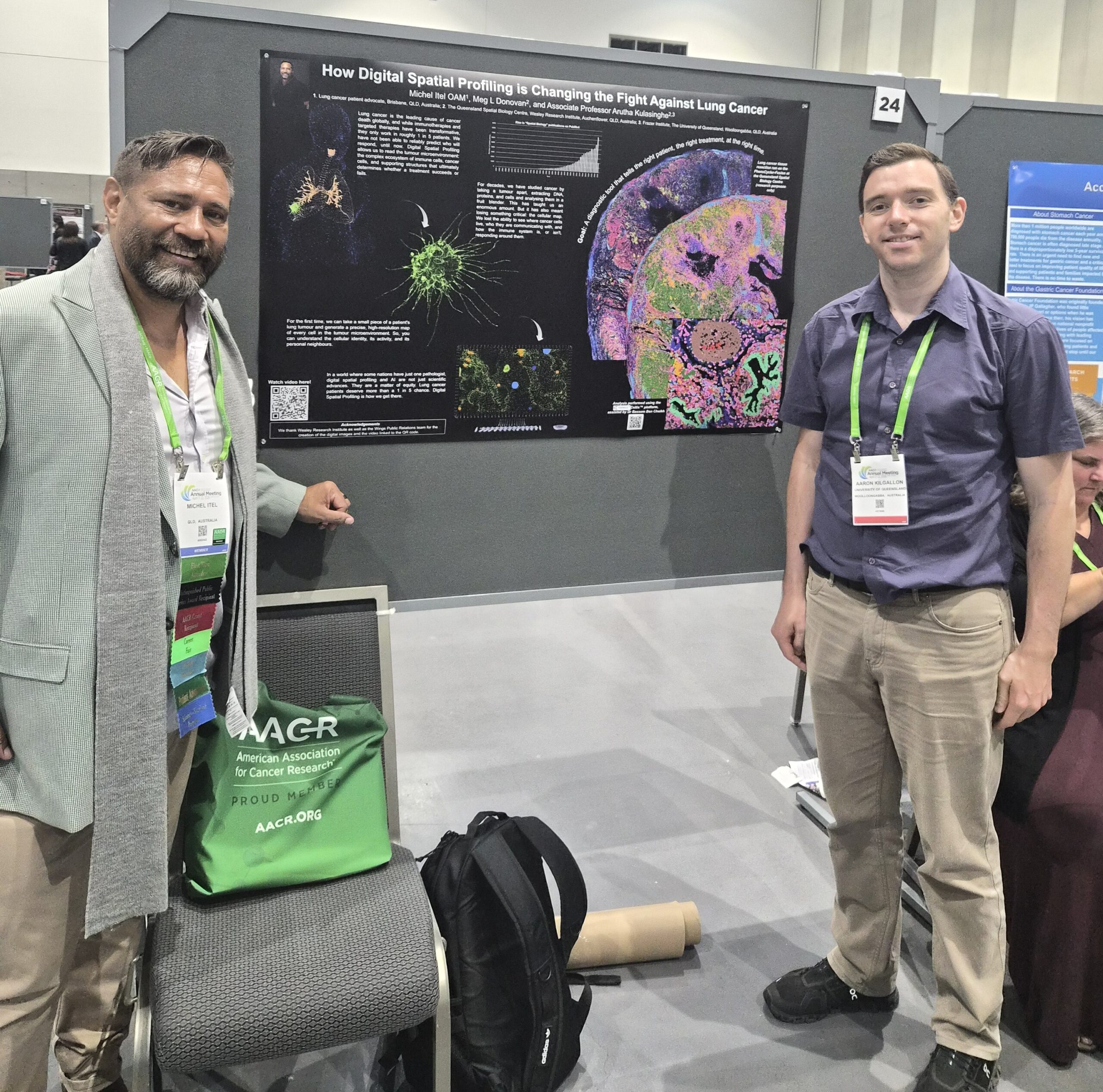
Michel presented on how digital spatial profiling is transforming the fight against lung cancer, sharing his experience with his own battle with lung cancer. As a passionate advocate for both lung cancer and spatial biology, Michel’s contribution brought human impact and global relevance to discussions often dominated by data alone.
Queensland Innovation, Global Influence
By sharing discovery, collaborating internationally, and integrating patient perspectives, QSBC continues to strengthen its worldwide impact, ensuring that advances made locally contribute meaningfully to improved cancer outcomes everywhere.
Learn more about the innovative research at the Queensland Spatial Biology Centre.