
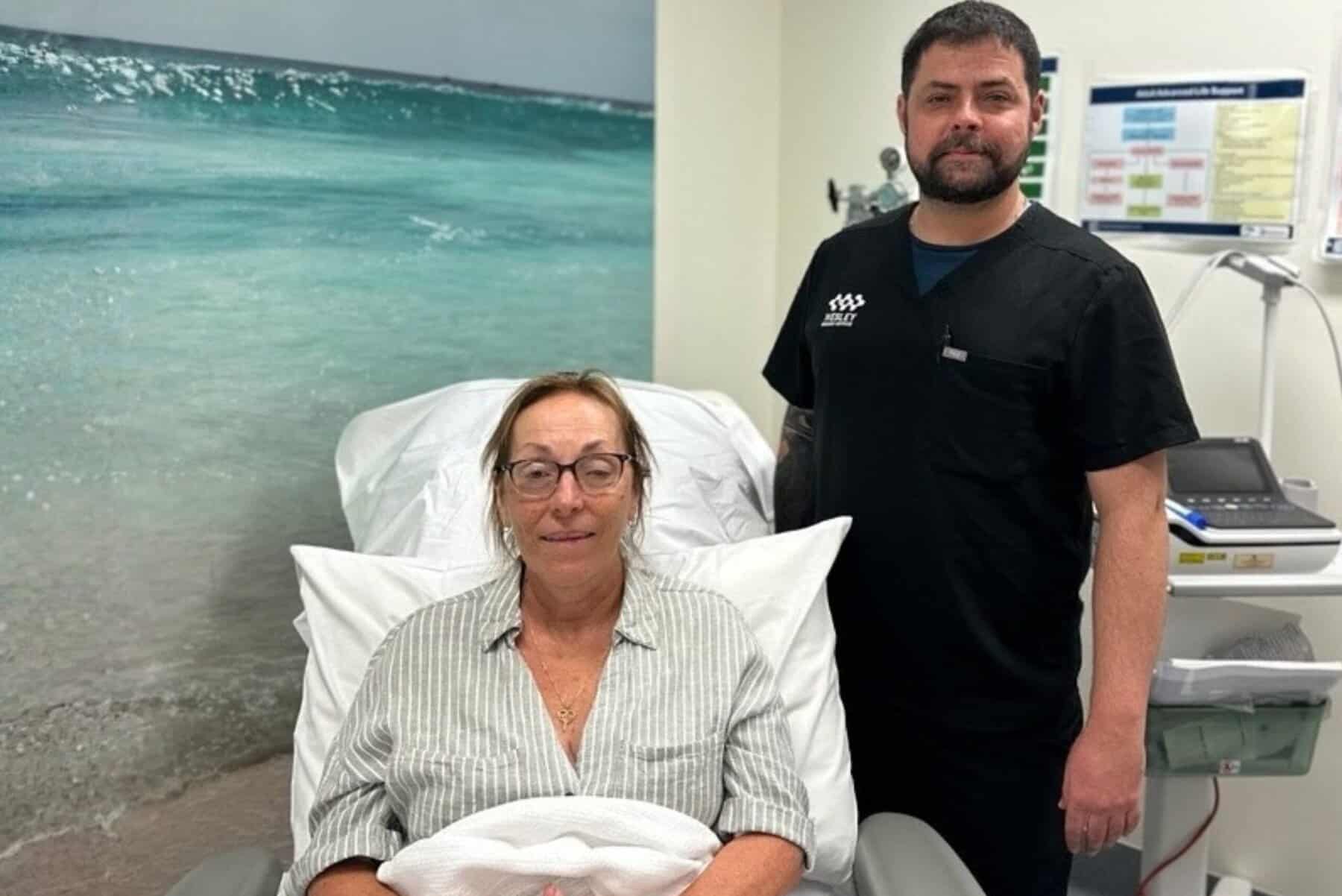
Colleen’s life in Victoria Point is full of family, daily activity and deep connection. She and her partner are embracing their empty‑nester years while their adult children raise families of their own. Together they have ten grandchildren and another on the way.
Behind her warm presence and active lifestyle is a powerful story of resilience shaped by her family’s experience living with Myotonic Dystrophy Type 1 (DM1).
A Diagnosis Hidden in Plain Sight
Colleen’s journey with DM1 began long before she ever felt a symptom. Her father was diagnosed at age 60 in the 1980s, after years of assuming his stiffness and mobility issues were arthritis. That diagnosis prompted Colleen to seek clarity for herself and her family. She and her son underwent DNA testing at the Royal Brisbane Hospital, and both learned they carried the condition.
At the time, Colleen felt completely healthy. No symptoms. No limitations. No reason to believe DM1 would one day affect her life. She continued raising her family, working, and staying active, carrying the knowledge of her diagnosis throughout her 30s and 40s.
When Symptoms Finally Arrived
It wasn’t until age 57 that Colleen felt the first unmistakable signs. One day, she fell five times. That moment changed everything.
“That was when I thought, okay, this is real. This is starting to get to me now,” says Colleen.
Her balance had become the first noticeable symptom. Subtle at first, then impossible to ignore. Even so, she remained mobile and independent, determined not to let the condition define her.
She registered with the Princess Alexandra Hospital’s genetic clinic under Dr Cullen O’Gorman, where she now receives annual assessments and ongoing support. By then, she had already begun to think more seriously about preventative strategies and long‑term management.
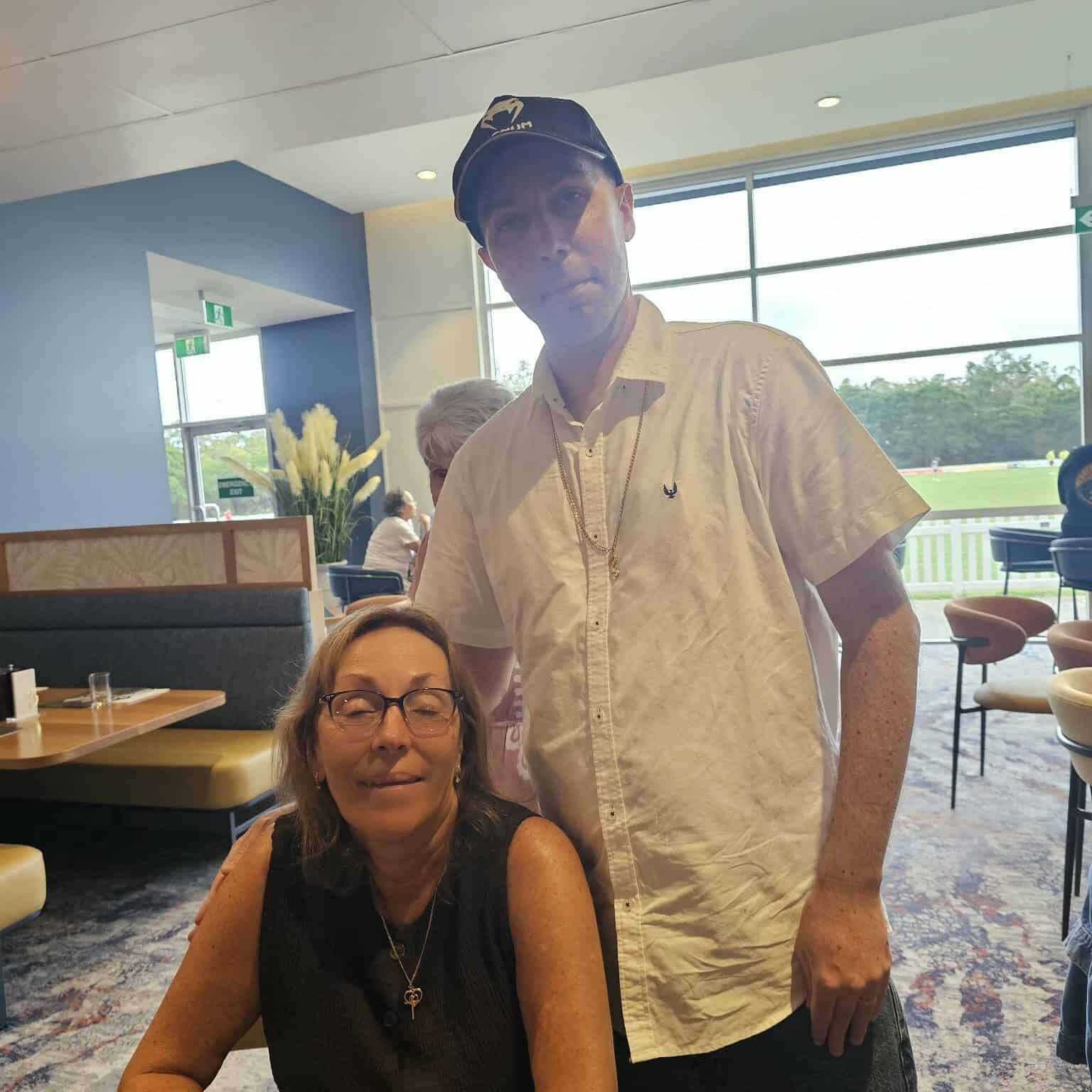
DM1 runs through Colleen’s family in different ways. Her son Brendan was diagnosed at the same time she was—he was just 13. He carries a larger genetic repeat size and experiences more visible muscle wasting, especially in his legs and hands. Her younger brother also has DM1 and now uses a wheelchair. His daughter, Colleen’s niece, has been diagnosed as well and is in the early stages. What was once thought to be a rare condition is now understood to be far more common than originally believed.
It is a genetic, multisystem disorder characterised by progressive muscle wasting, weakness and myotonia (difficulty relaxing muscles). The condition can affect skeletal muscle, the heart, eyes and central nervous system. While there is currently no cure, management focuses on addressing symptoms such as cataracts, cardiac complications and mobility challenges.
Living with Myotonic Dystrophy Type 1 (DM1)
To still keep active, hydrotherapy became her anchor. Three times a week, for an hour at a time, Colleen works in the warm water at the Cleveland pool, sometimes with a physiotherapist by her side.
The goal isn’t to stop DM1, but to slow its progression and maintain strength for as long as possible.
Colleen
Outside the pool, she keeps moving; Zumba at home, sessions on her exercise bike and strength training on her home gym. It’s clear that moving daily is her way of taking control.
One of the hardest adjustments came at age 57, when she made the decision to stop driving.
“It was the independence. Not being able to just jump in the car and go to the shop. I’m lucky I’ve got my partner and support workers. But losing that independence was hard,” she says.
Despite that, she has adapted with grace. She remains mobile, active, and engaged in daily life, supported through the NDIS and surrounded by people who care deeply for her.
Explaining the Condition
When people ask about her condition, Colleen keeps it simple: “It’s a muscle‑wasting disorder.” But she has learned that even with more explanation, many people still struggle to understand.
People look at me and think there’s nothing wrong. They don’t realise what’s going on internally. Even with this trial, they say, ‘Oh, so you’re going to be fixed.’ And I say, ‘No, there’s no cure.’ They might slow it down, maybe stop it, but it’s not something you fix.
Colleen
Others can’t see the fatigue, the muscle weakness, or the daily adjustments she makes to stay safe and mobile.
As Colleen’s symptoms slowly progressed, she began receiving support through the NDIS, something she’s grateful for even if it took time to adjust to needing help. Losing the ability to drive at 57 was one of the hardest changes, and having a support worker now and then has helped her maintain independence in new ways.
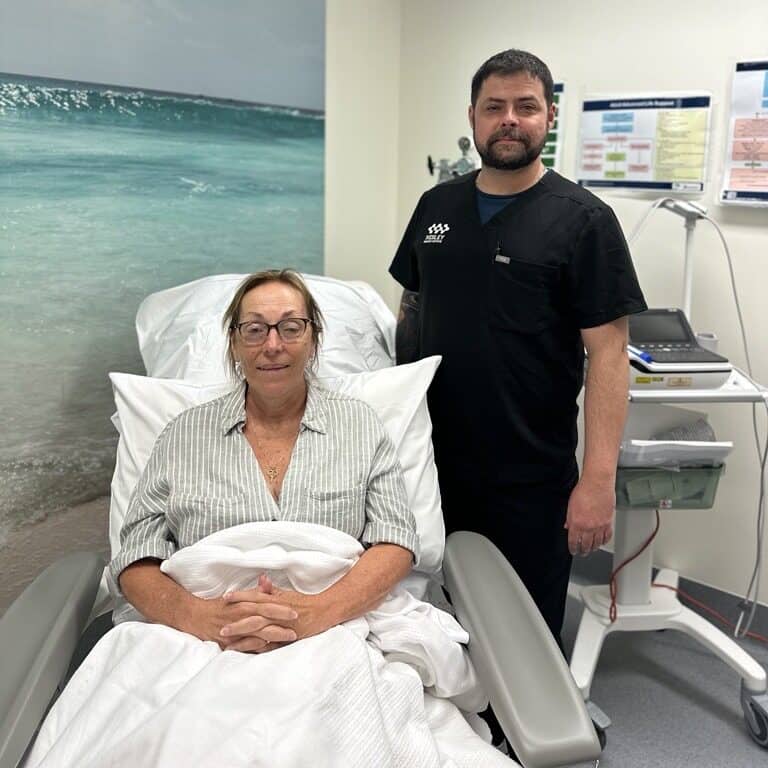
Colleen became interested in neurological research at the Wesley Research Institute, led by Dr Robert Henderson. Dr Henderson is a senior staff specialist in Neurology at the Royal Brisbane and Women’s Hospital and The Prince Charles Hospital, an Associate Professor at the University of Queensland, and conducts private practice at The Wesley Hospital in Brisbane. Pursuing his interest in research, Dr Henderson is currently active in clinical trials focusing on motor neurone disease and neuromuscular disorders at the Wesley Research Institute.
By having the right infrastructure at WRI, we are excited that we have been able to bring gene therapy trials to people living with rare neuromuscular diseases.
Dr Robert Henderson
While no cure exists, treatments focus on managing symptoms via medication, devices, and therapy. Colleen often thinks about her grandchildren and about the young children being diagnosed today.
If research can stop the condition in its tracks for future children who get diagnosed with Myotonic Dystrophy, then that’s worth everything.
Colleen
She also thinks of her son, who lives with a more severe strain of DM1. “I’m 62 and I haven’t got it that bad. But if I can help make things better for them, then I’ll do whatever I can.”- Colleen
For Colleen, hope is what keeps her so positive. Hope that the next generation will have better options, earlier interventions, and maybe even treatments that can stop DM1 before it takes hold. To anyone with Myotonic Dystrophy, Colleen shares a straightforward and encouraging perspective.
Read everything that you can about the condition and get some professional help. Find out what you can do. Don’t, by any means, go, ‘Oh poor me’. Just get out there and really think about what you can do to help yourself and others with myotonic dystrophy.
Colleen
Colleen’s story is not one of fear or resignation. It’s one of awareness, action, and support. Her experience highlights the importance of early diagnosis and genetic testing, even when symptoms aren’t yet visible. It also shows the power of proactive management, community support, staying physically engaged, and supporting research.