
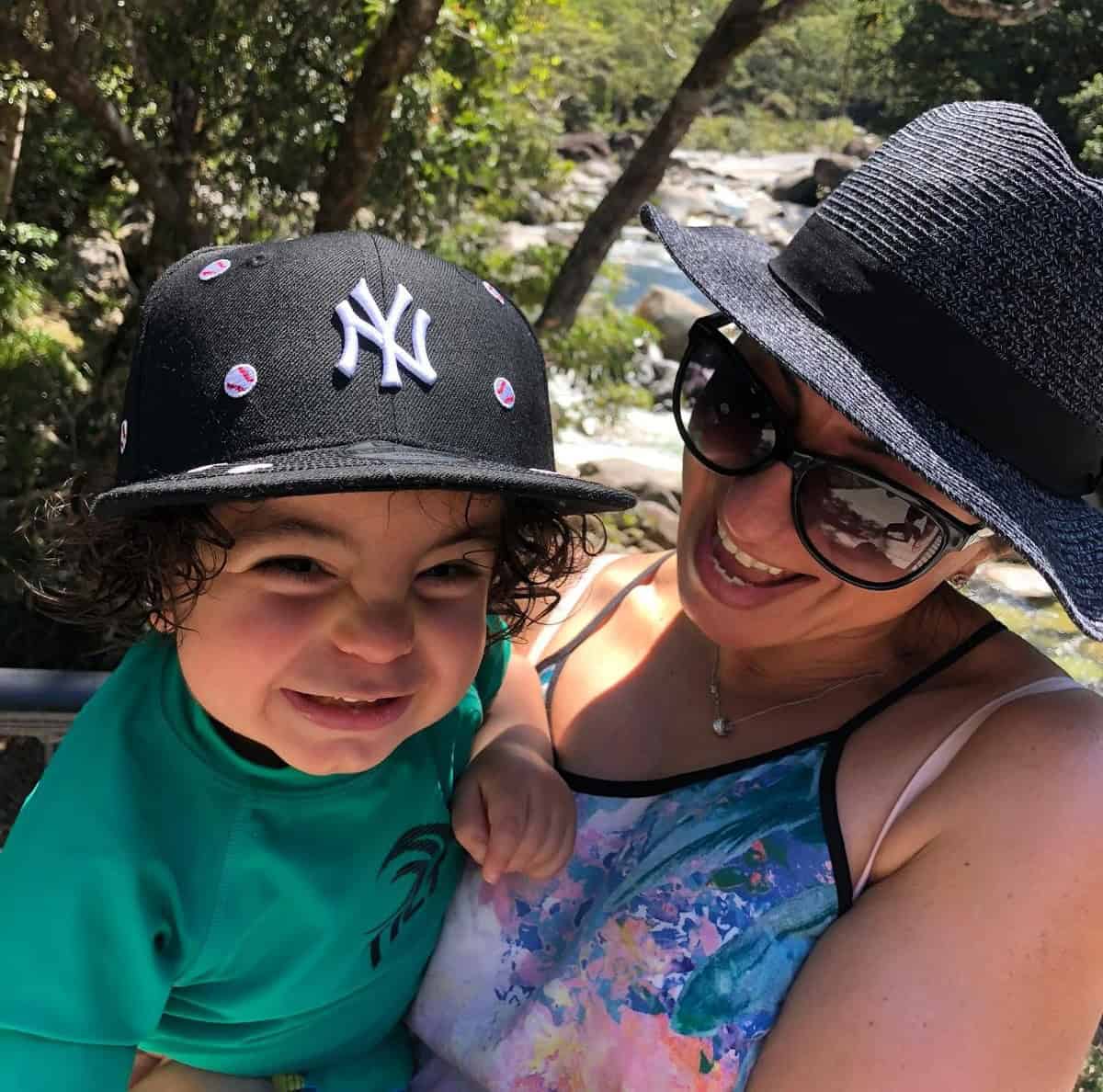
In 2018, Ataia Elhage, a 48-year-old mother, found herself in a situation no one ever expects: battling tongue cancer. At the time, she was 41 and on a family holiday in Port Douglas with her family when what seemed like a minor health issue turned into a life-altering experience. A painful mouth ulcer and a persistent earache led her to seek professional help, but her usual doctor and dentist dismissed it as nothing more than a minor medical issue.
However, Ataia’s instincts told her something wasn’t right. She wasn’t content to simply brush it off, so she sought a second opinion from a new GP. That decision changed the course of her life. This GP, who had trained under a renowned oncologist in Melbourne, ordered a biopsy and referred Ataia to an ENT specialist. Weeks later, the results were in, confirming that she had tongue cancer, which was growing rapidly.
The treatment was arduous as Ataia underwent extensive surgery that resulted in the removal of half of her tongue. The surgery left her with lasting effects including slight speech slurring, difficulty chewing and a dry mouth that remains a challenge to this day.

While she is still considered “well”, she has embraced her new reality with incredible strength, focusing on her advocacy work and family. She is particularly passionate about raising awareness of head and neck cancers, which are often underreported and misunderstood.
Ataia is deeply concerned about the increasing number of young, otherwise healthy women being diagnosed with these cancers. Reflecting on her own past, she admits to having socially smoked in her youth but never considered herself a smoker. It’s a stark reminder of how risk factors for cancer can be insidious and sometimes only surface years later.
While Ataia is cancer-free today, the effects of her treatment still linger. She knows firsthand how brutal radiation treatment can be and she wholeheartedly supports new advancements in cancer research.
Ataia is particularly passionate about the work being done at WRI’s Queensland Spatial Biology Centre (QSBC), where scientists are exploring tissue mapping to determine the most effective treatments for individual cancer patients.
It’s massive enough going through the surgery, but being able to personalise the treatment for each person, as opposed to what has been standard treatment in the past, which is surgery and then radiation, would result in a lot better outcomes for patients.
Ataia
Ataia believes that had this technology been available during her treatment, she might have avoided some of the harsh side effects of radiation. After her gruelling course of treatment, Atia has been cancer-free for the past six years.
She recently sat down with Natasha Robinson, Health Editor at The Australian and Channel 9. Watch her story below.
The Research
QSBC researchers are paving the way for personalised treatment plans. By analysing the tissue surrounding tumours, our researchers have uncovered vital clues that could help predict how well a treatment will work or if the cancer might resist it. An advance that not only brings hope to those affected by head and neck cancer but could also pave the way for further breakthroughs across a range of cancers. Read the study here – https://www.nature.com/articles/s41698-025-00963-0
Find out more about QSBC’s research into Head and Neck cancer.