
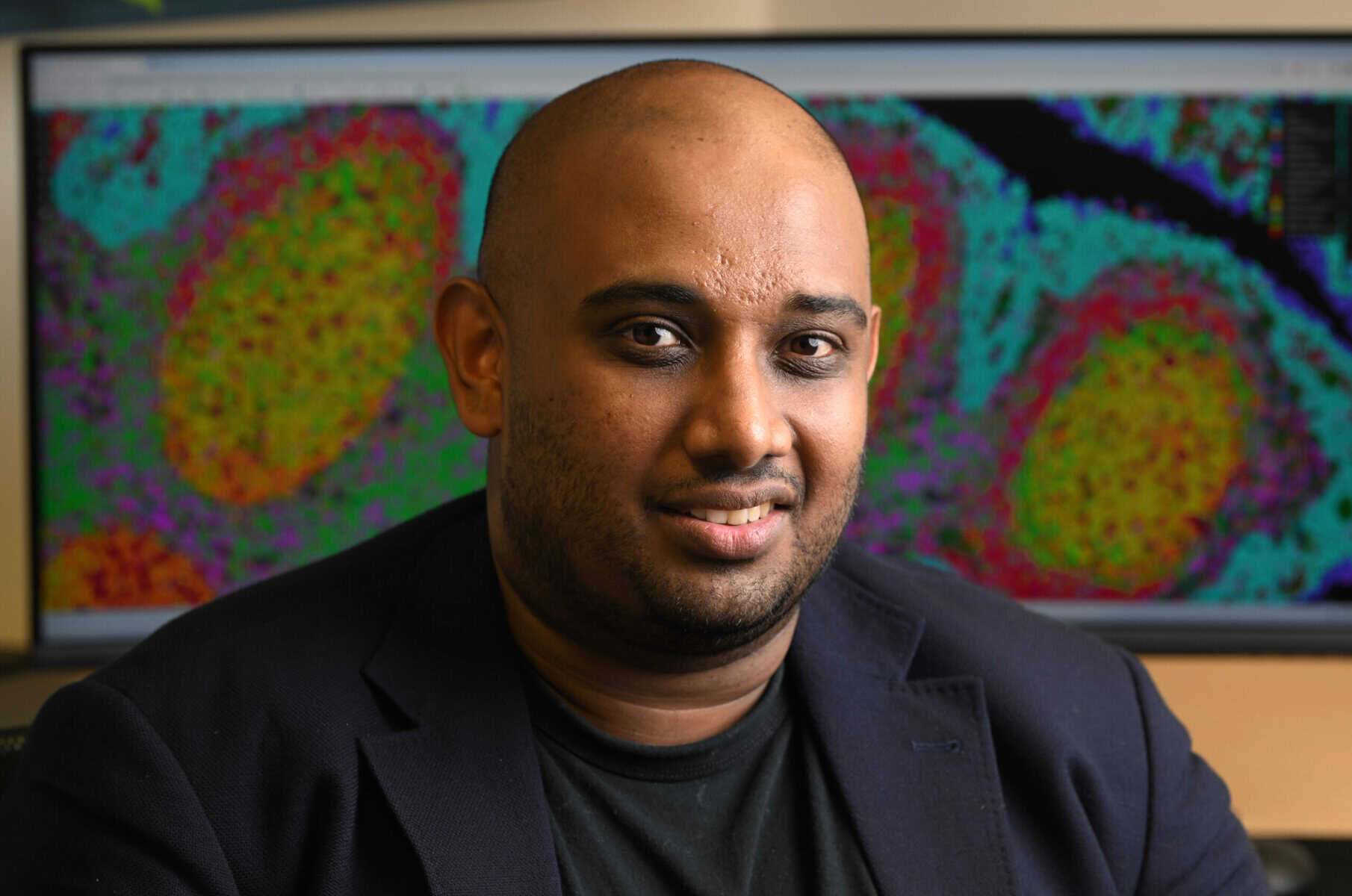
In a landmark move in diagnosing and treating chronic disease, Queensland has unveiled the world’s first Chair in Spatial Medicine – a prestigious, philanthropically-funded research leadership position appointed to Associate Professor Arutha Kulasinghe.
The Chair in Spatial Medicine, which has been created with the support of Wesley Research Institute and the Brazil Family, will harness cutting-edge technology to create digital cellular “maps” of patient samples, combining biology, data and computing to design highly targeted treatments that could dramatically improve outcomes for people with cancer, cardiovascular disease and beyond – positioning Queensland as a global leader in this life-changing field.
The Chair position will be led by the Wesley Research Institute (WRI) in partnership with The University of Queensland (UQ).
The establishment of this position is truly a massive leap forward in the precision medicine revolution, where mapping tissues in their native environment will transform how we diagnose, predict and treat disease.
Associate Professor Arutha Kulasinghe
A/Prof Kulasinghe has published more than 100 peer-reviewed articles, including in top journals such as The Journal of Clinical Oncology, Nature Genetics and The Lancet Microbe. In 2023, he was named Cure Cancer Australia’s “Researcher of the Year”, and in 2024 he featured in The Australian’s “Top Innovators List”. He maintains strong international collaborations with institutions including Yale Medical School, Stanford Medicine and leading industry and biotech partners.
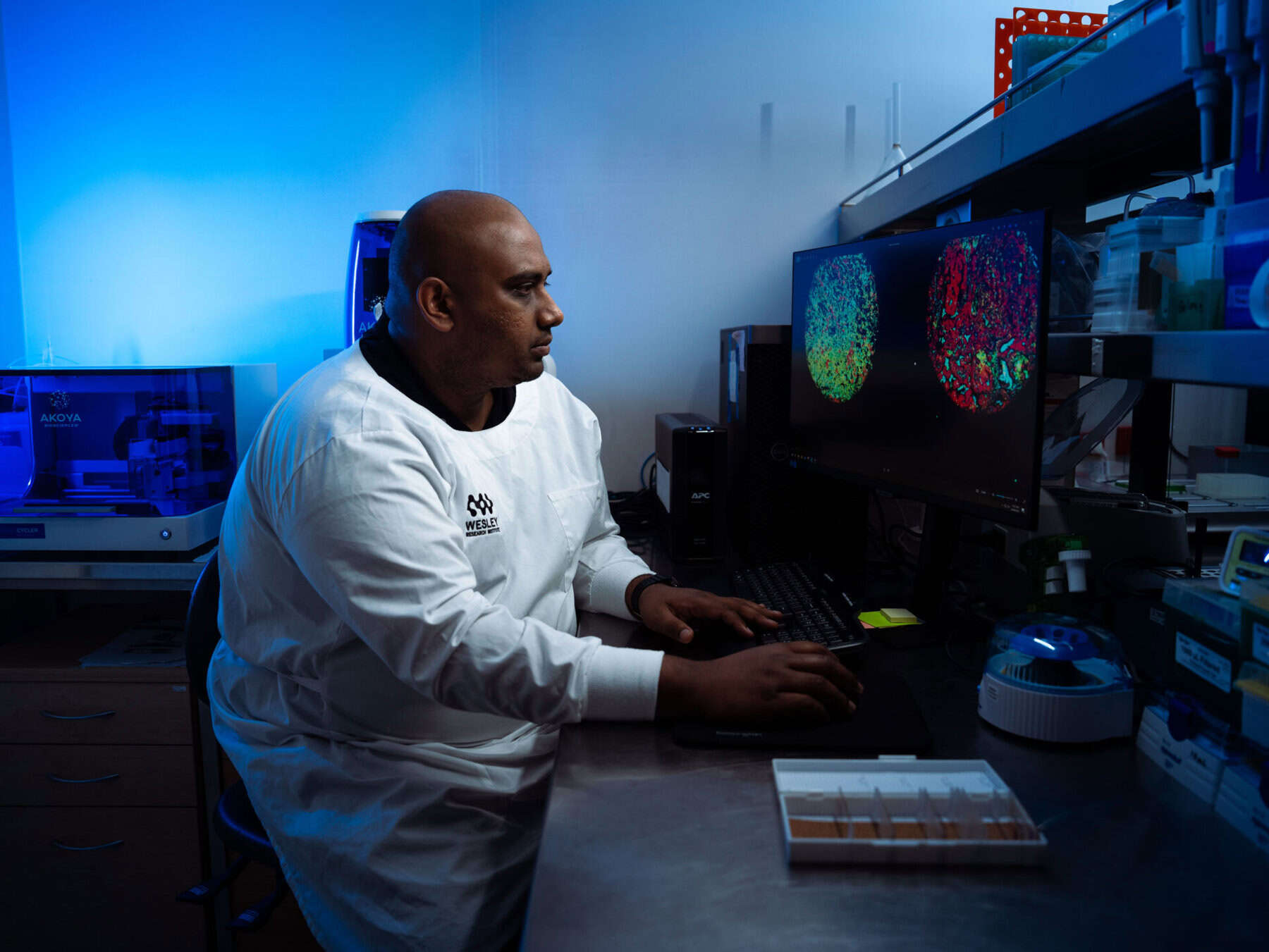
In this role, A/Prof Kulasinghe will mentor a multidisciplinary team of more than 30 members – including surgeons, oncologists, computational scientists and early-career researchers – to nurture Australia’s next generation of talent.
“The Chair represents a landmark step in biomedical innovation,” said Andrew Barron, CEO of Wesley Research Institute.
“It empowers Associate Professor Kulasinghe to drive discoveries that make treatments more precise and effective, while strengthening our collaboration with UQ and international partners to deliver real benefits for patients.”
Spatial medicine is reshaping how we understand and treat disease.
Andrew Barron, CEO of Wesley Research Institute
“With this world-first role, Queensland will lead the translation of cutting-edge science into clinical advancements, fostering global partnerships and sustainable research excellence.”
Professor Victoria Brazil, speaking on behalf of the Brazil Family, said, “We believe in supporting exceptional people and ideas that have the potential to change how disease is understood and treated. Our hope is that this investment helps accelerate discovery and strengthens Australia’s leadership in this important field. We are proud to continue partnering with Wesley Research Institute to support work that builds knowledge and improves health outcomes over time.”
As spatial medicine transitions from experimental research to mainstream clinical use, this world-first Chair highlights Australia as a global leader in spatial medicine.
This announcement was featured in The Australian this morning.