
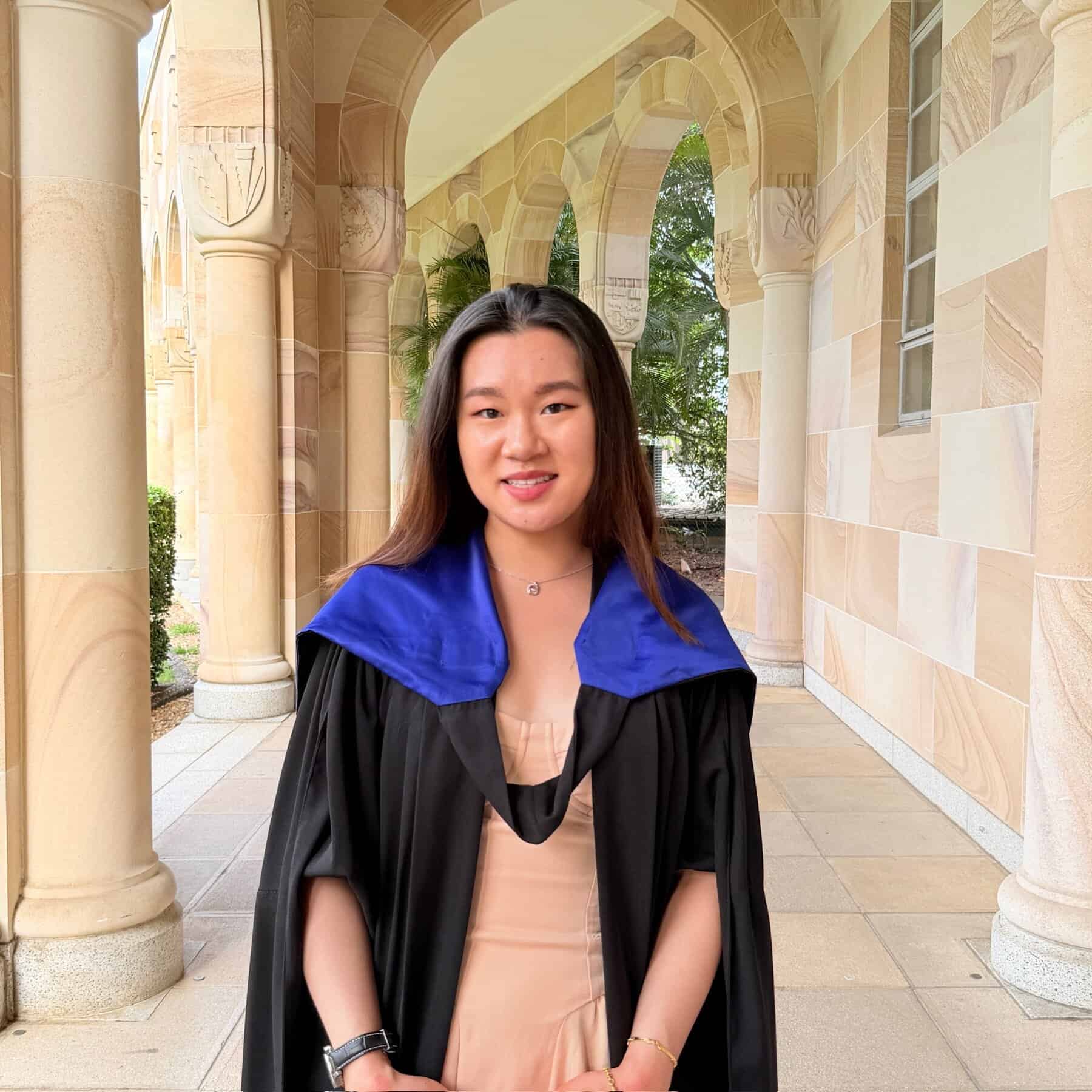
We had the chance to chat with Yena Ng for an insider peek at her experience over the past year, from her university placement to becoming an integral part of the Wesley Research Institute team.
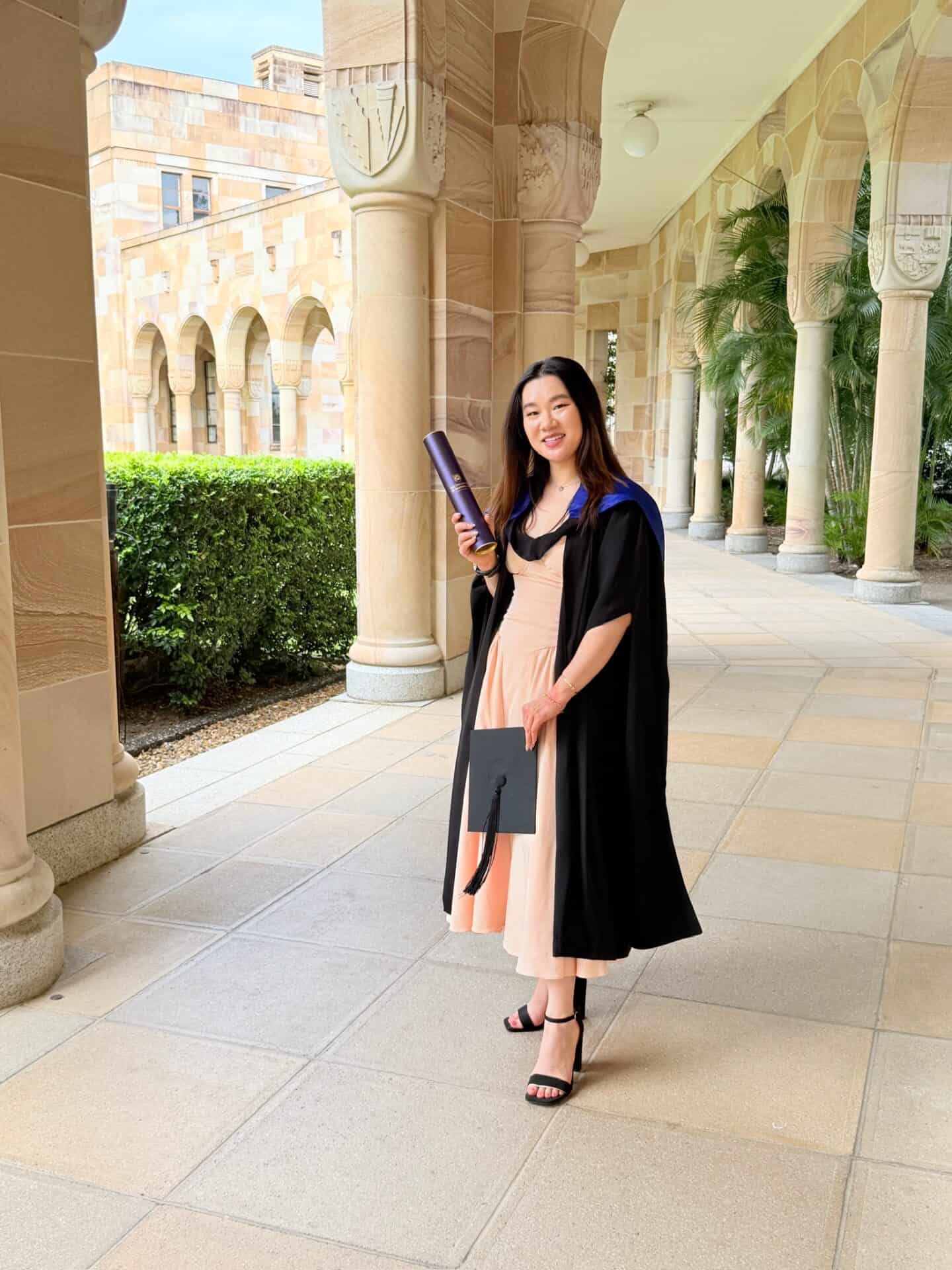
At just 26, Yena brings a wealth of knowledge and passion to her new role. Originally from the United States, she began her career in pharmacy after earning her Bachelor’s degree in Biochemistry and Molecular Biology in 2021. Fast forward to 2026, she’s a proud graduate of the Master of Pharmaceutical Industry Practice program at The University of Queensland.
Now, Yena has taken an exciting step forward as a Clinical Trials Assistant at the Wesley Research Institute’s Clinical Trials Centre, where she’s currently supporting groundbreaking neurology clinical trials.
We asked Yena to share her thoughts on her placement experience and what excites her most about joining the Wesley Research Institute team. Here’s what she had to say…
“Tell us about your experience at the university.”
Starting my program at The University of Queensland was a completely new chapter. I arrived in Brisbane without knowing anyone in the city. It was a mix of excitement and nerves, building a life from scratch, making new friends, and experiencing life in another country.
My degree essentially explains how a new medicine goes from an idea in the lab to something people can safely use. It covers all the stages of drug development, including the early lab research, testing in clinical trials, and the regulatory steps required in different countries. It also looks at what happens after a drug hits the market, like monitoring for safety and effectiveness. Overall, it provides a clear picture of the significant effort, time, and resources required to ensure a medicine is safe and effective.
“Tell us more about your placement at WRI”
My placement at the Wesley Research Institute was such a rewarding experience. I learned so much medical knowledge and even had the privilege of observing procedures like leg muscle biopsies and endoscopic duodenal biopsies, something I never expected to see firsthand. Helping out on IP (investigational product) dosing days made me feel like a valued part of the team, and working alongside such dedicated professionals showed me just how important collaboration and attention to detail are in clinical research. Overall, being part of these trials gave me a real sense of how research can directly impact patient care and made me appreciate the effort that goes into every step of the process.
I’ve been fortunate to have several mentors who have guided me along my journey. At UQ, Linda McConnell was an invaluable career advisor, helping me with my resume, cover letters, and interview preparation, which gave me a strong foundation for entering the professional world. At the Wesley Research Institute, I work with a fantastic team, and I’ve been especially grateful for the guidance from Emma and Jacqui in the neurology group. They’ve been incredibly encouraging, acknowledge my contributions, and make me feel valued. Their support, along with the wider team around me, has played a big role in helping me build my confidence and has made a lasting impact on my professional growth.
“What made you interested in the field of clinical trials?”
My interest in clinical trials originally started while working in a pharmacy, but it was through my studies and my placement at WRI that it really grew. I genuinely enjoy learning, and this field constantly challenges me to do just that, whether it’s picking up new medical terminology or teaching myself things like spirometry and respiratory concepts to better understand trial assessments. There’s always something new to learn, and I enjoy fully immersing myself in a topic to understand how everything fits together.
One common misconception about clinical trials is that participants are used solely for experimentation, which can lead to hesitation or distrust. There is an extremely thorough and strict safety process before any investigational product is tested in people. Extensive research is done beforehand to determine safe dosing, and trials are closely monitored at every stage. Participant safety is always the top priority, with multiple layers of oversight and medical professionals involved to ensure risks are minimised as much as possible.
“Any challenges or puzzling questions you faced during your placement?”
One of the main challenges during my placement was connecting the theory I learned at university to real-world clinical practice. Keeping track of different protocols, visit schedules, and assessments required me to be highly organised and detail-oriented, especially in a fast-paced environment. I also learned that plans don’t always go exactly as expected, so being able to adapt in real time was essential. These challenges pushed me to slow down, pay close attention to detail, and be proactive in filling knowledge gaps, which ultimately helped me grow more confident and capable in a clinical research setting.
“What were the highlights of your placement?”
Working with such an incredible team! The team’s supportive culture really stood out, and I loved how the company organised fun team lunches and events that brought everyone together. From day one, I felt included and valued, almost like I was a full member of the company rather than just a placement student. Being part of such a welcoming and collaborative environment made the experience both professionally rewarding and genuinely enjoyable every day.
“What skills have you developed that you didn’t expect to learn?”
One skill I didn’t expect to develop was how comfortable I’d become learning on the job. Working within a multidisciplinary team, I was constantly picking up new medical terminology, teaching myself unfamiliar concepts, and asking questions to better understand trial procedures. I also developed stronger communication skills and confidence through working closely with the same team members, different stakeholders, and supporting participants during their trials. Overall, the experience helped me become more adaptable, detail-oriented, and comfortable stepping outside my comfort zone.
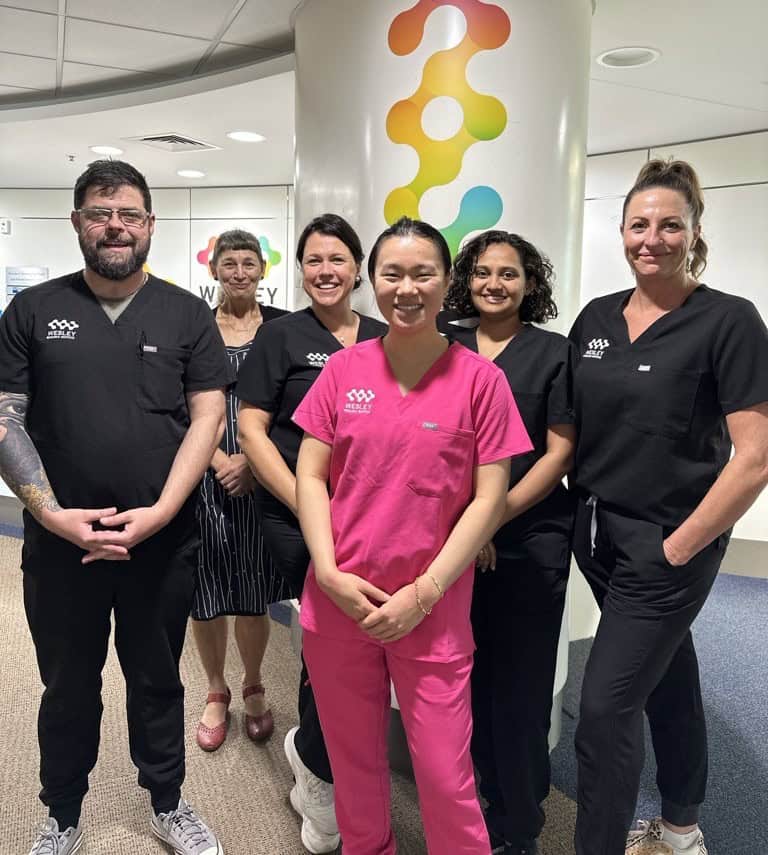
Yena with the Neurology Clinical Trials team
“What’s one piece of advice you’d give to someone considering studying medical science or looking to do a placement in a clinical trials centre?”
Don’t be afraid to put yourself out there and take initiative. Being proactive not only helps you learn more, but it also shows others that you’re capable, reliable, and ready to take on greater responsibility. Asking questions, offering help, and stepping outside your comfort zone can make a huge difference in how much you gain from both your studies and a placement in a clinical trials centre.
“What would you like to do in the future? If you could work anywhere in the world, where would it be and why?”
In the future, I’d love to continue working in the clinical research and pharmaceutical industry, with the short-term goal of becoming a study coordinator overseeing multiple clinical trials. I enjoy the organisational and collaborative aspects of the work and would like to take on more responsibility as I continue to grow in the field. If I could work anywhere in the world, I’d choose to stay in Australia. I’ve grown to really appreciate the work–life balance, positive working culture, and the beautiful landscape and weather. I’ve also been lucky to build meaningful friendships here, which have made my experience even more rewarding and truly made it feel like home.
We’re excited to see the incredible impact Yena will have with the Clinical Trials Centre. Her dedication to driving medical research and enhancing patient care truly stands out.
Learn more about the Clinical Trials Centre below.