
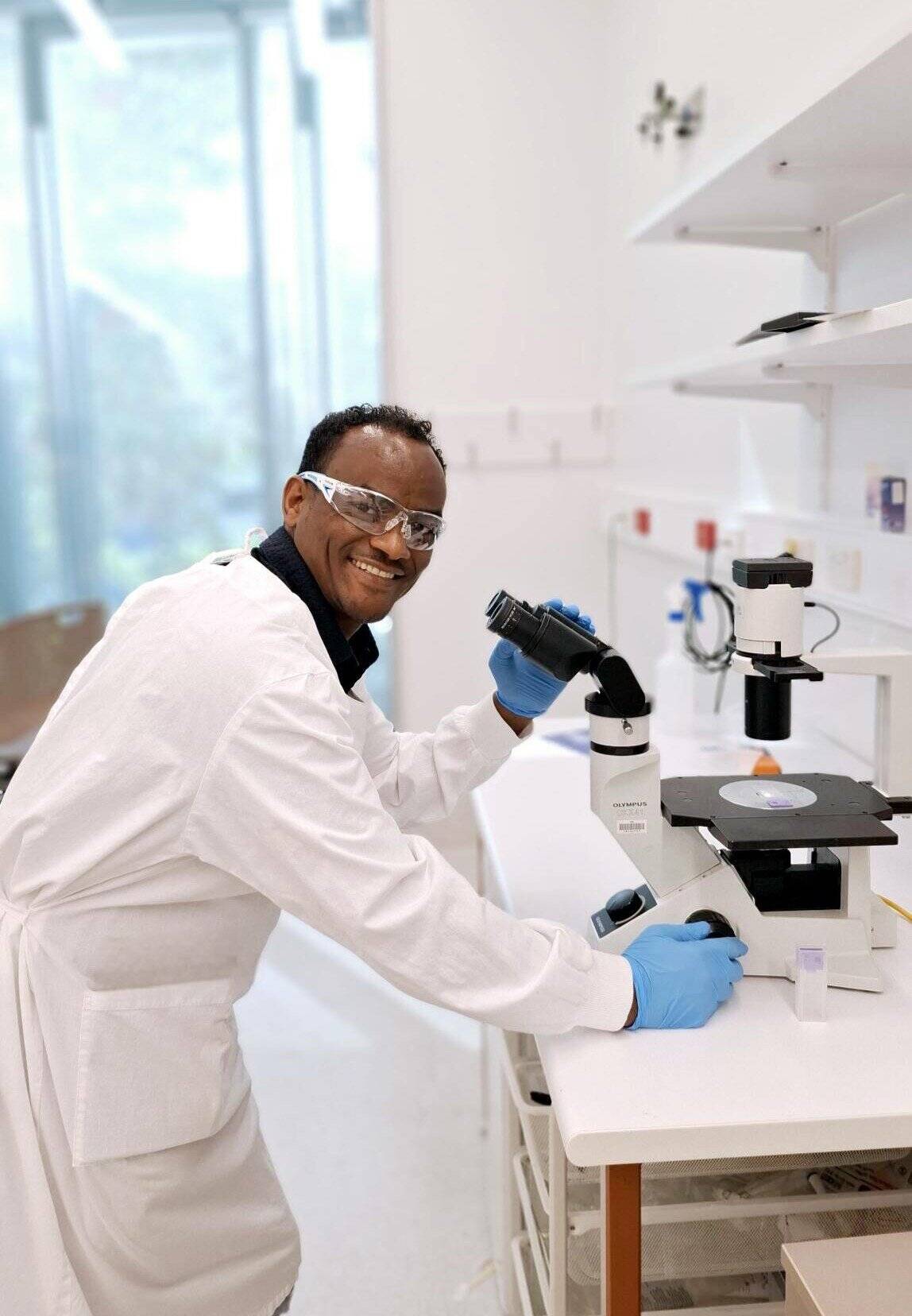
We had the pleasure of sitting down with Kidane Siele Embaye, a PhD student at the Frazer Institute, The University of Queensland and a key collaborator within the Queensland Spatial Biology Centre (QSBC). Originally from Eritrea, Kidane’s journey from a medical doctor to studying cutting-edge research is nothing short of inspiring.
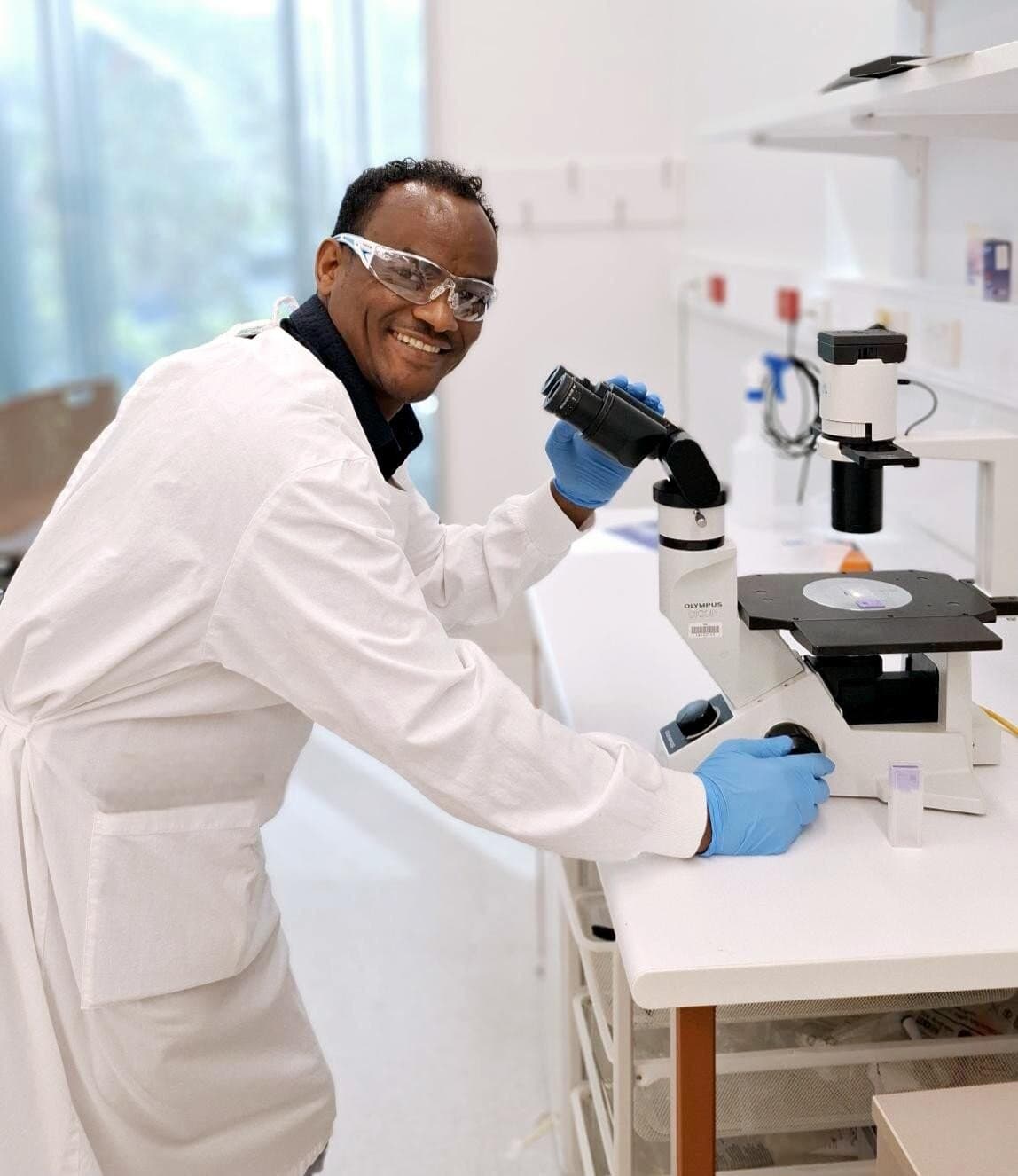
As a practising clinician and with specialised training in pathology, Kidane has developed a deep passion for cancer spatial biology and immuno-oncology. His research focuses on how the immune system interacts with lung tumours, a curiosity sparked by clinical observations of patient outcome variability and the rapid evolution of spatial technologies that now allow scientists to explore tumours in unprecedented detail.
Through his PhD work, Kidane is committed to bridging the gap between pathology and precision oncology, driven by a strong belief in the power of translational research to improve patient care.
Kidane’s studies are partly sponsored by the Wesley Research Institute through donations by the Brazil Family Foundation. We are incredibly grateful for their ongoing support.
Learn more about Kidane’s research and what fuels his curiosity into spatial biology research.
“Tell us about your life at University”
University life has been intellectually stimulating, bridging clinical pathology and cutting-edge translational research. I have benefited from collaborative environments that combine expertise in biomedical research, oncology, immunology, and computational biology. This interdisciplinary exposure fuels my curiosity and drives my engagement with new spatial technologies that define tumour ecosystems more comprehensively. I am supervised primarily by Associate Professor Arutha Kulasinghe, who is the Scientific Director of the Queensland Spatial Biology Centre (QSBC), and co-supervised by Professor Ken O’Byrne and Associate Professor Brett Hughes.
“Tell us about your research”
Cancer is one of the deadliest diseases, growing within a complex ‘neighbourhood’ known as the tumour microenvironment, a community made up of cancer cells, immune cells, and other supportive cells. My research creates a kind of ‘Google map’ of this environment, showing where different cells live and interact within lung tumours, much like drawing a city plan at the cellular level. By understanding these spatial relationships, we can better predict which patients are more likely to respond to immunotherapy, a treatment that activates the body’s immune system to fight cancer. Ultimately, this knowledge could help doctors select the right candidates and improve personalised treatment strategies.
My passion lies in cancer spatial biology and immuno-oncology, particularly in understanding how the immune system interacts with lung tumours. This interest grew from my clinical observations of the variability in patient outcomes and from the exciting advancement in spatial technologies that now allow us to explore tumours in unprecedented detail.
In my research, I primarily focus on spatial profiling of the tumour microenvironment in non-small cell lung cancer to better understand why patients respond differently to immunotherapy and targeted therapies. By integrating advanced multiplexed imaging and spatial transcriptomics platforms, I will explore how diverse cell types organise and interact within tumours. This work aims to reveal the cellular neighbourhoods and immune dynamics that drive treatment resistance or success, ultimately contributing to more precise and effective cancer therapies.
Currently in my first year, I’m at the stage of data generation and spatial analysis.
“What methods or tools do you use most often?”
I primarily use advanced spatial profiling technologies such as the PhenoCycler-Fusion (PCF) platform and the NanoString GeoMx Digital Spatial Profiler (DSP). These cutting-edge tools enable simultaneous detection of dozens of proteins or RNA molecules directly within tissue samples, while preserving their spatial context. This high-dimensional data reveals how immune and cancer cells interact within the tumour microenvironment, an insight that traditional methods cannot capture. I also apply advanced computational techniques, including deep learning–based image segmentation, to accurately annotate and classify individual cells and extract meaningful biological patterns.
“How has your research changed since you started the PhD?”
Transitioning from the clinical area to research is not easy, but after nearly ten months into my PhD journey, it has been an immensely rewarding transformation. My perspective has evolved from diagnosing diseases using clinical skills to providing histopathologic diagnosis under the microscope to exploring the spatial complexities of the tumour microenvironment in non-small cell lung cancer. Using advanced spatial profiling technologies such as PCF and GeoMx DSP, I am now uncovering how tumour, immune and stromal handshakings shape responses to immunotherapy. This journey has strengthened my passion for translational research and deepened my understanding of how spatial biology can bridge the gap between pathology and precision oncology.
“How does your work connect to real-world issues or applications?”
Clinically, only a fraction of non-small cell lung cancer (NSCLC) patients benefit from immunotherapy, largely due to tumour complexity and immune evasion. My research addresses this by dissecting the spatial and functional heterogeneity of tumours to improve the prediction of treatment response. Identifying new biomarkers and understanding immune exclusion mechanisms can guide personalised treatments, reducing ineffective therapies and associated costs, ultimately improving patient survival. Integrating metabolic, proteomic, and transcriptomic data at spatial resolution offers a comprehensive approach now being recognised as essential in precision oncology.
“What made you interested in this field of spatial biology?”
My clinical background as a medical doctor allowed me to witness firsthand the suffering of patients with cancer, their complications, and the challenges of poor therapeutic response. As a pathologist, I also became deeply aware of tumour heterogeneity and the variability in patient outcomes. The emerging evidence that immune cells and their spatial organisation profoundly influence immunotherapy response inspired me to explore the field of immuno-oncology. The rapid evolution of spatial technologies then presented an exciting opportunity to apply innovative research methods aimed at improving cancer treatment and patient care.
“Who or what has influenced your academic journey the most?”
My journey has been inspired by young mentors and scientists who are tirelessly working to develop breakthroughs in cancer diagnostics and therapeutics, a remarkable example being my supervisor, Associate Professor Arutha Kulasinghe.
“In what ways has WRI supported your academic journey?”
Wesley Research Institute’s scholarship support represents an invaluable opportunity in my PhD journey. Through this partnership, I’ll gain access to advanced technologies and a collaborative environment dedicated to real-world biomedical challenges. I’m genuinely looking forward to my upcoming placement at Wesley Research Institute next year, where I hope to learn from leading clinician-scientists and other experts, and contribute to translational cancer research. This support reflects a shared commitment to improving patient outcomes and empowers me to advance cancer diagnostics and therapeutics through innovative spatial profiling.
“ Where do you see your career heading next?”
I envision a career at the intersection of academic and clinical research, where discoveries in spatial biology can be translated into clinical diagnostics and therapeutic strategies. I aspire to work in translational research centres or the biotechnology industry, focusing on personalised cancer immunotherapy and targeted therapies. This path will allow me to apply my expertise to improve patient stratification, optimise treatment responses, and ultimately contribute to better cancer care worldwide.
“What’s one piece of advice you’d give to someone considering a PhD?”
A PhD journey is a marathon that demands sustained passion and purpose. One has to choose a research question that truly ignites curiosity. Embrace interdisciplinary learning and remain resilient, as challenges are inevitable but often pave the way for the most meaningful discoveries. Surround yourself with mentors, collaborators, and peers who inspire and support you, because science thrives in a community built on shared curiosity and perseverance!
Clinical Director Professor John Fraser AO and Scientific Director Associate Professor Arutha Kulasinghe from the Queensland Spatial Biology Centre (QSBC) are leading a collaborative team of researchers, clinicians, lab scientists, data analysts and higher education students to map cellular interactions within tissues in unprecedented detail.
Learn more about the work of the QSBC and the collaborators that bring it all together.