
An Australian-first study by researchers at Wesley Research Institute is giving new hope to women facing one of the deadliest cancers, with scientists discovering that the survival odds of ovarian cancer patients may rise when certain ‘fighter’ immune cells are located close to their tumours, opening the door to smarter, personalised treatments.
Researchers at our Queensland Spatial Biology Centre (QSBC) in Brisbane have uncovered this promising clue while investigating high-grade serous ovarian cancer (HGSOC), one of the deadliest forms of the disease, which claims over 207,000 lives worldwide each year.
“High-grade serous ovarian cancer is a lethal gynaecological malignancy, most often detected at a late stage of disease and at which point response to therapy is only seen in a minority of patients,” said Naomi Berrell, QSBC Researcher and first author of the paper published this week in iScience (CellPress).
“It’s a disease that’s understudied compared to others, yet so deadly, which is part of why we felt driven to focus on it.”
With a five-year survival rate of just 17% for advanced cases, this discovery could be a lifeline.
Using high-plex spatial proteomics – a cutting-edge technique – the QSBC team, co-led by Scientific Director Associate Professor Arutha Kulasinghe, analysed tumour samples from 49 patients. They mapped the tumour microenvironment battleground where immune cells, the body’s soldiers, face off against cancer.
We analysed HGSOC tumours cell by cell to create digital maps of the disease to better understand the tumour microenvironment and how this contributes to patient survival.
Naomi Berrell, QSBC researcher
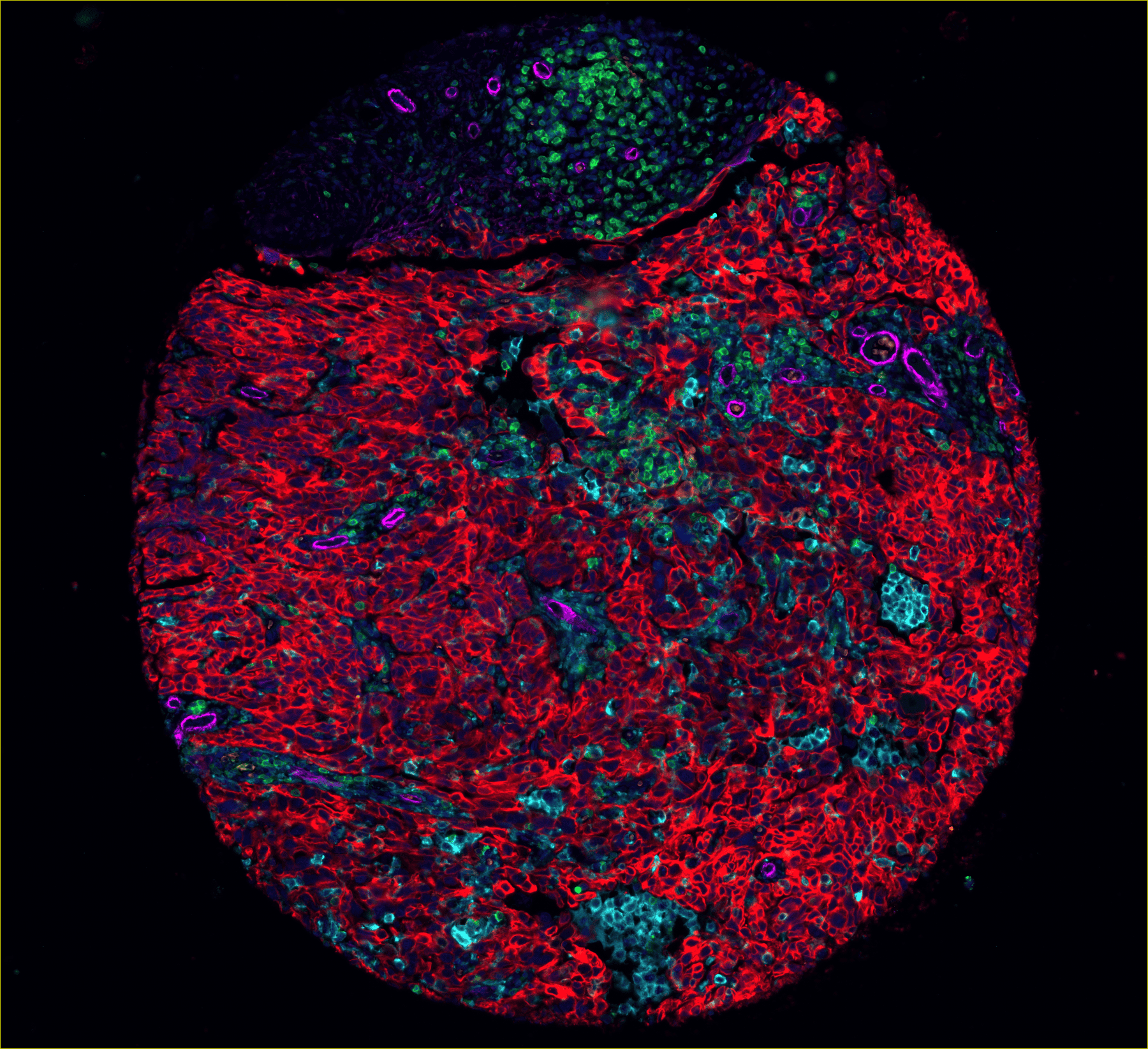
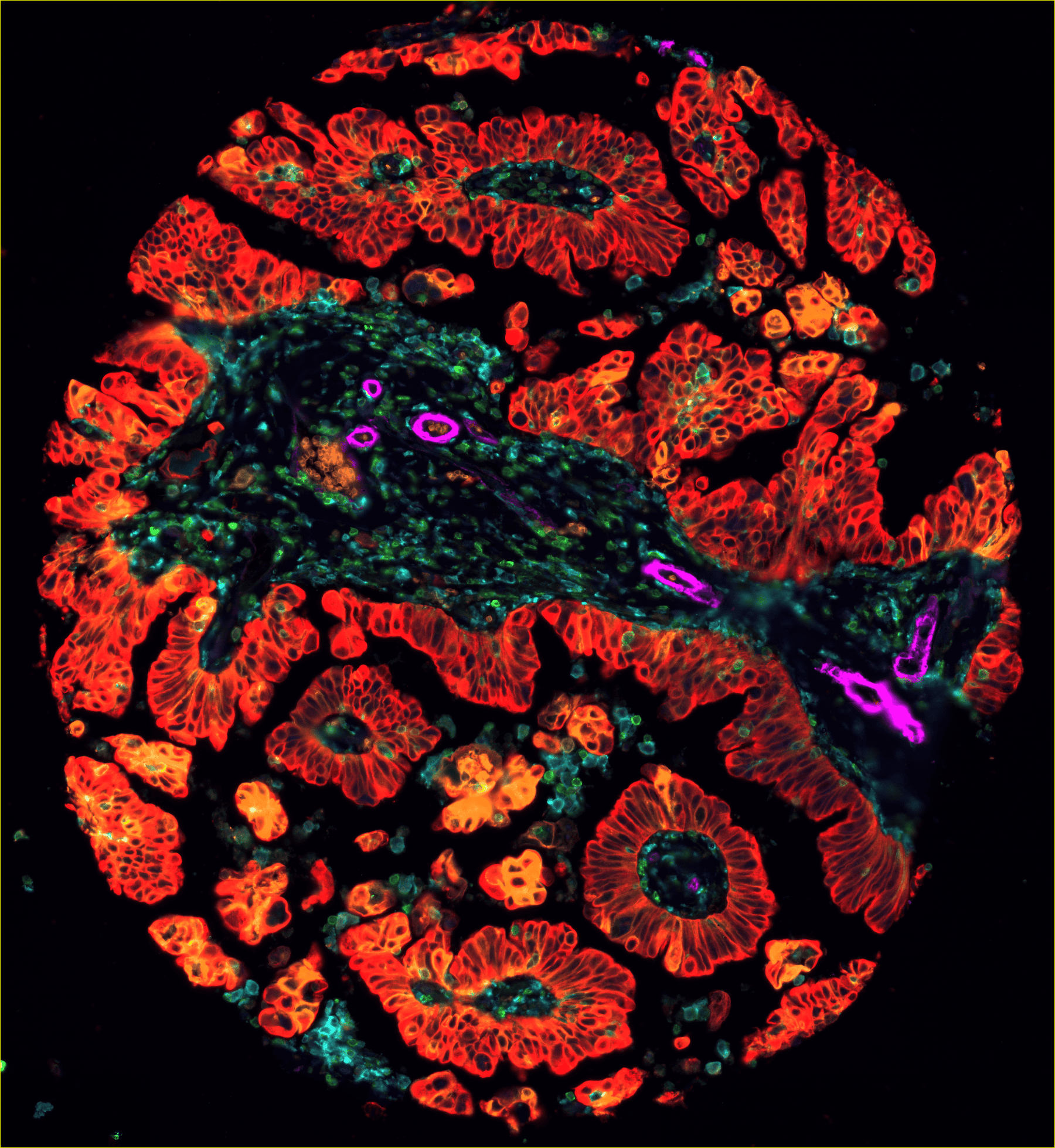
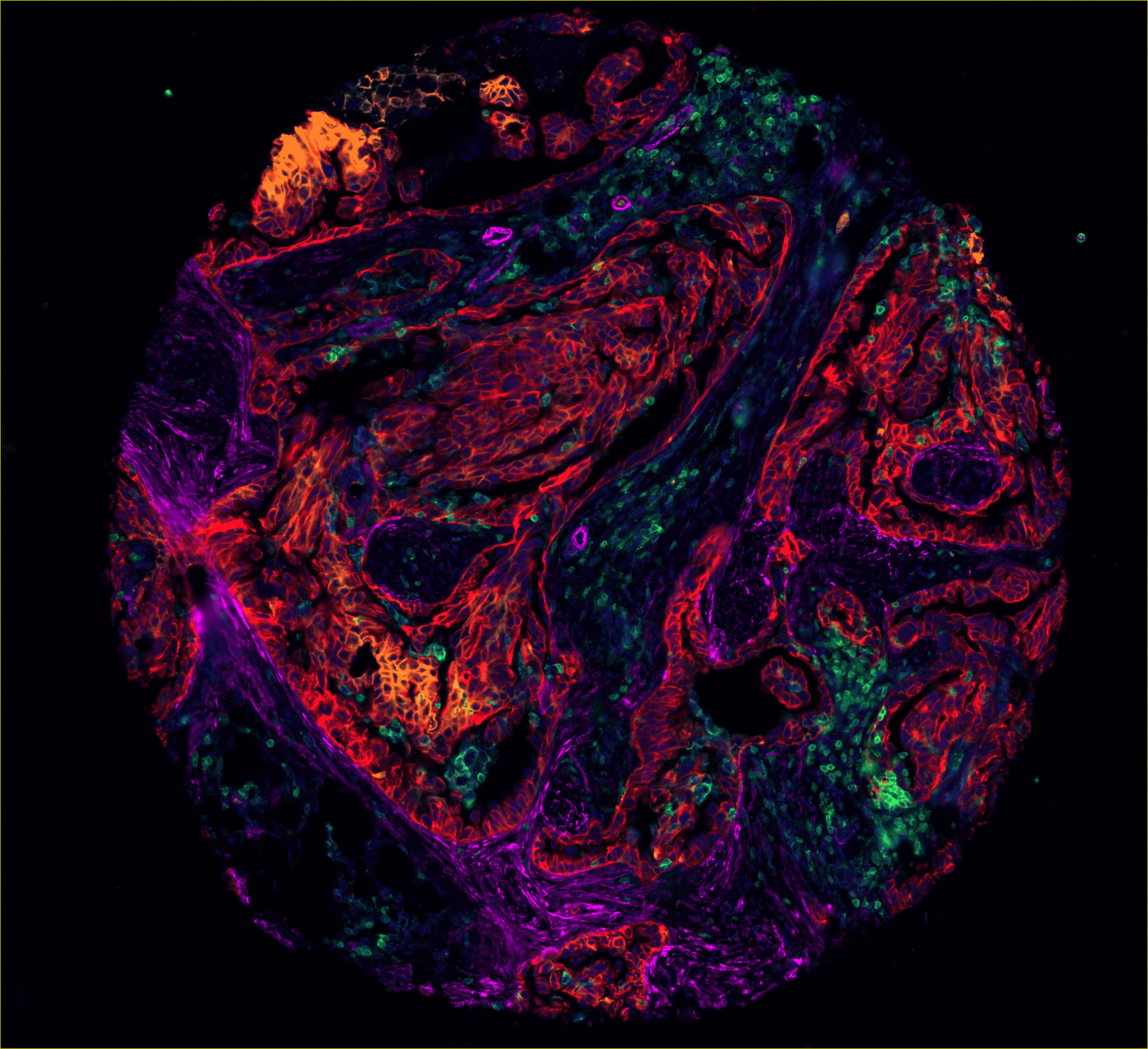
Tissue microarray of 1mm cores from ovarian cancer samples. Red show shows the tumour cells, green and blue show immune cells , purple shows smooth muscle, orange shows areas of the tumour that are metabolically active (taking up glucose).
The findings spotlight two key immune cells – CD66+ cells and cytotoxic CD8 T-cells.
“We found that a higher number of CD66+ cells in a 50µm radius of tumour cells and a higher number of cytotoxic CD8 T-cells within a 10µm radius of the tumour boundary were associated with improved overall survival,” said Berrell.
“Seeing those CD66+ cells show up as potential fighters against the tumour was really exciting – it’s not something we expected to stand out so clearly and it gives us a new direction to explore.”
In plain terms, when these fighter immune cells are close enough to recognise and attack the tumour cells, patients fare better.
But it’s not a simple fight, according to Associate Professor Kulasinghe.
“In an effective immune system, the immune cells should kill the cancer cells. But what we’re learning is that the cancer cells share messages to reduce their effect – sort of making them frenemies,” he said. Some soldiers are doing their job, others are exhausted, and some even get friendly with the tumour, weakening the attack.
What the study shows is that where certain immune cells are, how much energy they have and who their friends are around them, are important in tumour killing. We are mapping the tumour-immune cell battlefield
Associate Professor Aurtha Kulasinghe, QSBC Scientific Director
The tumour’s energy level adds another layer of complexity. “In areas of metabolically active tumour cells, the proximity of T-Reg Cells was associated with better overall survival when the activity of the tumour was increased… however, with metabolically less active tumours, there was an association with worse overall survival,” Berrell said.
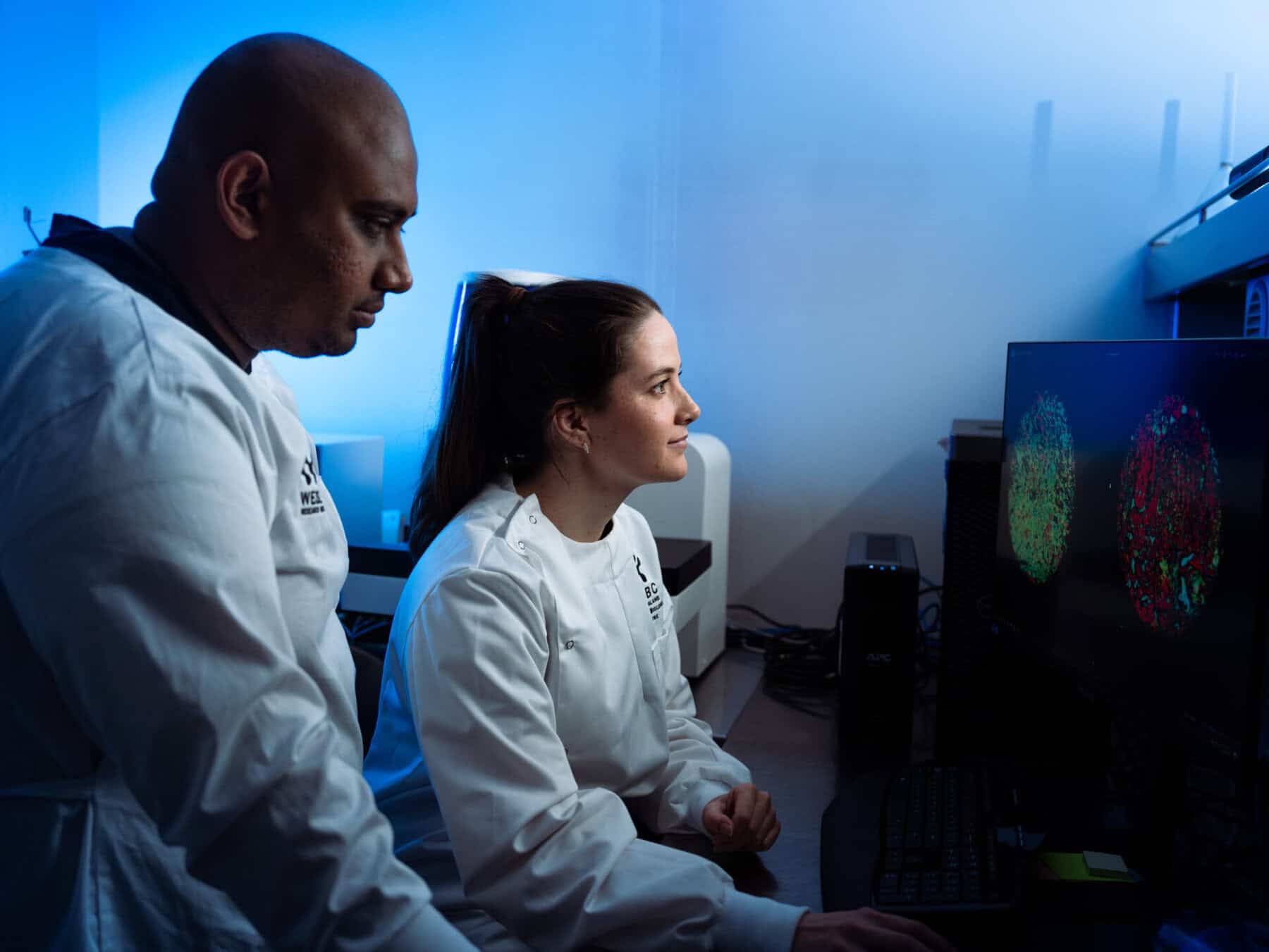
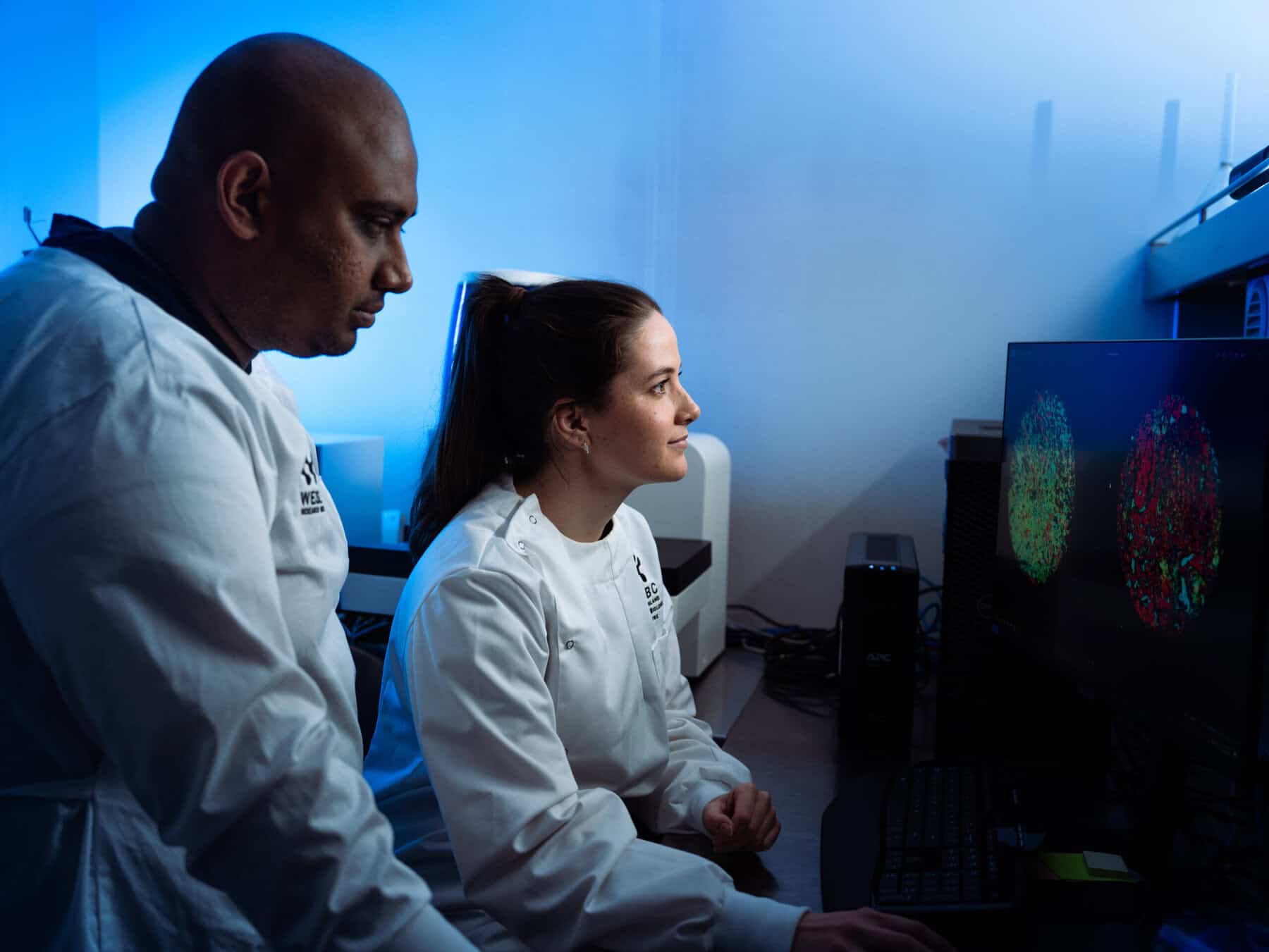
Queensland Spatial Biology Centre Scientific Director, Associate Professor Arutha Kulasinghe and researcher Naomi Berrell are inspecting ovarian cancer tissue microarray
This study, in collaboration with The University of Queensland, could pave the way for smarter, tailored treatments, according to Wesley Research Institute CEO Andrew Barron.
With over 313,000 new cases globally each year – often missed until it’s too late because symptoms mimic minor aches – this research could help doctors tailor therapies to each patient’s cancer ‘map’. Ovarian cancer’s elusive nature has long challenged medical experts, but this study marks a step forward.
With over 313,000 new cases globally each year – often missed until it’s too late because symptoms mimic minor aches – this research could help doctors tailor therapies to each patient’s cancer ‘map’. Ovarian cancer’s elusive nature has long challenged medical experts, but this study marks a step forward.
Andrew Barron, Wesley Research Institute CEO
The QSBC is now urging further research to turn these insights into practical solutions for the thousands of women diagnosed annually. To learn more and support vital research that is helping increase patient survival rates.
This study by the Queensland Spatial Biology Centre was featured in the Courier Mail. Read here.
Learn more about the Queensland Spatial Biology Centre.
Naomi Berrell, Aaron Kilgallon, Meg L. Donovan, Clara Lawler, Chin Wee Tan, Kidane S. Embaye, Rafael Tubelleza, James Monkman, John F. Fraser, Ken O’Byrne, Ruby Huang, Arutha Kulasinghe, Proximity and metabolic activity proxies in the Tumour Microenvironment as predictors of survival in High Grade Serous Ovarian Cancer (HGSOC), iScience, 2025, 113572, ISSN 2589-0042, https://doi.org/10.1016/j.isci.2025.113572.