
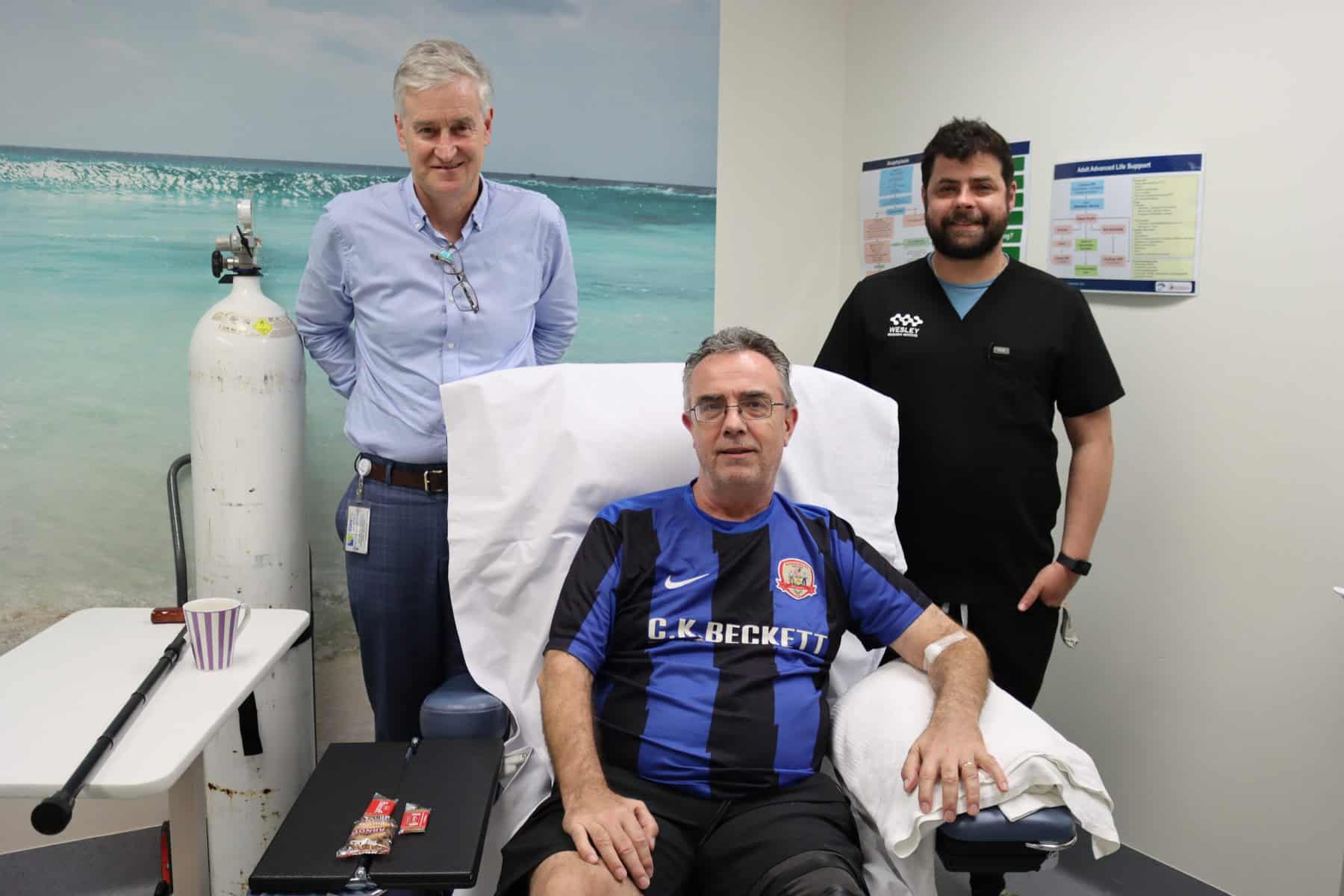
Dean is a proud Yorkshireman who made Australia his home nearly 21 years ago. Now 60, he lives in Brisbane with his beloved wife Michelle, close to his two daughters, Jade and Amy, and three lively grandkids.
Dean spent much of his working life in printing factories, a hands-on job that demanded physical strength and long hours. When he began experiencing persistent back pain, he put it down to years of heavy lifting. But after multiple scans and spinal injections failed to ease the discomfort, doctors dug deeper. An MRI revealed some abnormalities in his neck, but nothing that needed surgery, so he was referred to a neurologist.
One evening, while walking to the train with his wife for a night out, Dean noticed something strange – his foot was flopping and he felt like he was wearing clown shoes. It was subtle, but enough to raise concern. After reviewing his scans, the neurologist suspected Dean had a neurodegenerative disease. A few months later, he was diagnosed with Amyotrophic Lateral Sclerosis (ALS), a progressive form of motor neuron disease.
ALS, also known as Lou Gehrig’s disease, is a rare, neurodegenerative condition that affects the nerve cells responsible for voluntary muscle movement. Over time, it leads to muscle weakness, difficulty walking, speaking, and eventually breathing. With no known cure, sadly it is ultimately fatal.
Dean received a prognosis of two to five years – a moment that was both shocking and devastating. Through this incredibly difficult period, he’s been surrounded by the unwavering love and support of family and friends. Their constant presence has brought comfort, strength, and hope, helping him face each day with courage.

With the support of the NDIS, Dean and Michelle have been modifying their home to accommodate his changing needs. He’s had to give up driving manual cars, but still enjoys the independence of driving an automatic. Even with these adjustments he’s made to his daily life, his spirit remains strong.
I don’t Google my condition. I don’t want to see what’s coming. I just take each day as it comes.
Dean
Shortly after his diagnosis, Dean was referred to Princess Alexandra Hospital, Neurologist Doctor Po-Sheng Yang who has helped him receive specialist care. When a clinical nurse at Princess Alexandra Hospital mentioned the possibility of joining a clinical trial, Dean didn’t hesitate. “These trials are about extending my life by a few months,” he says. “But I’ll try anything. Give them a go.”
Dean is now participating in a clinical trial led by Dr Robert Henderson at Wesley Research Institute for a treatment being tested to slow or halt disease progression and offers hope for meaningful results in ALS patients. Whether he receives the active drug or a placebo, he’s proud to contribute to research that could benefit others living with ALS.
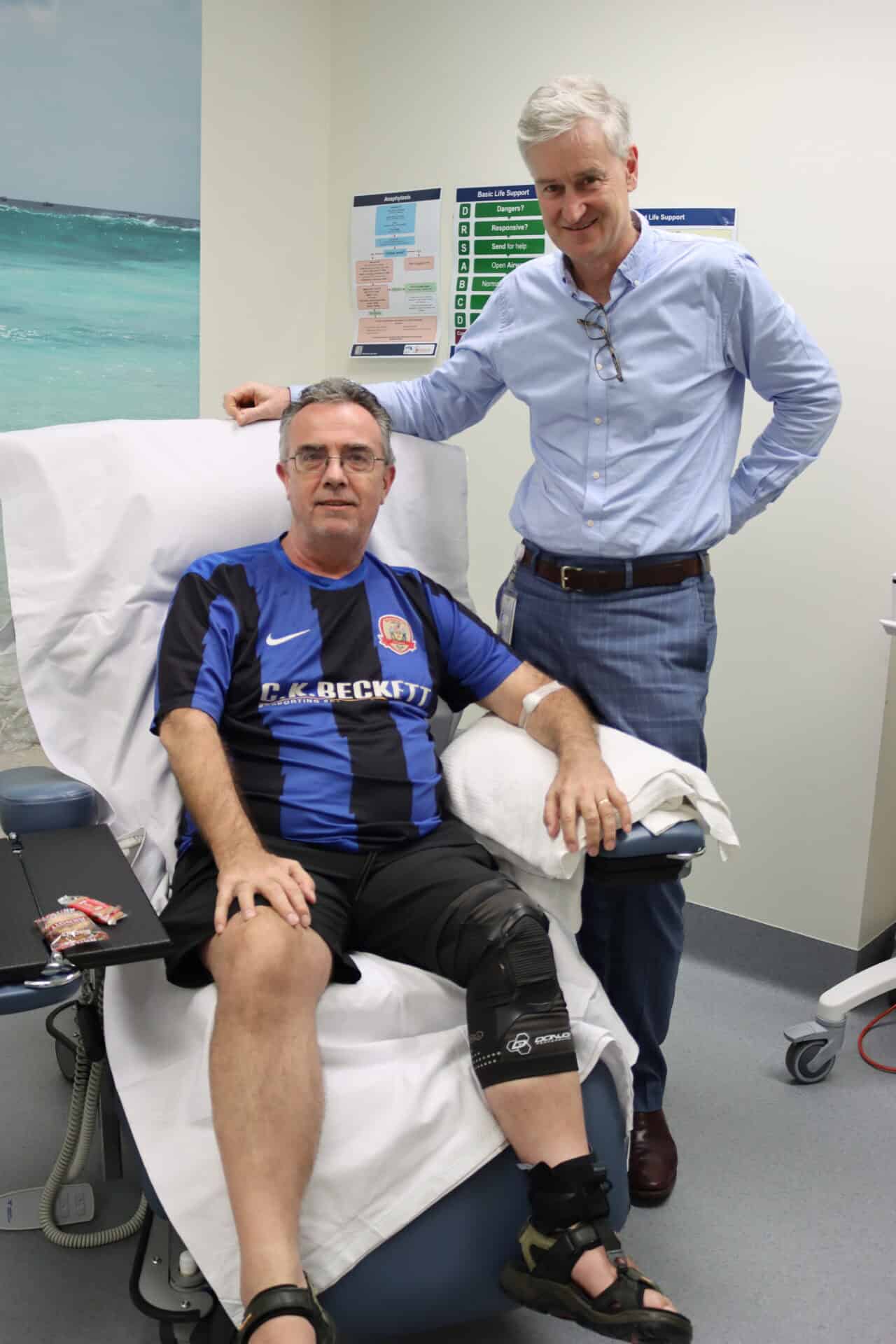
“We desperately need clinical trials that target the cause of ALS. The Wesley Research Institute has been a strong supporter of neuromuscular trials and offers particular advantages, especially the ability to do overnight monitoring and novel means of drug administration”, says Dr Robert Henderson.
The clinical trial coordinators and clinicians at the Wesley Research Institute are lovely. They look after me, have a laugh with me. I feel safe and welcomed.
Dean
Deans’ advice to others considering MND clinical trials? “Give it a go. You’ve got nothing to lose.”
Despite the gravity of the diagnosis, Dean chose to focus on what matters most: his family and giving hope to others with the condition. Recently, he participated in walking 2-4km in an event, Walk to Defeat MND’ in Queens Park in Toowoomba. Dean, along with his team, raised more than $6000 for the event!
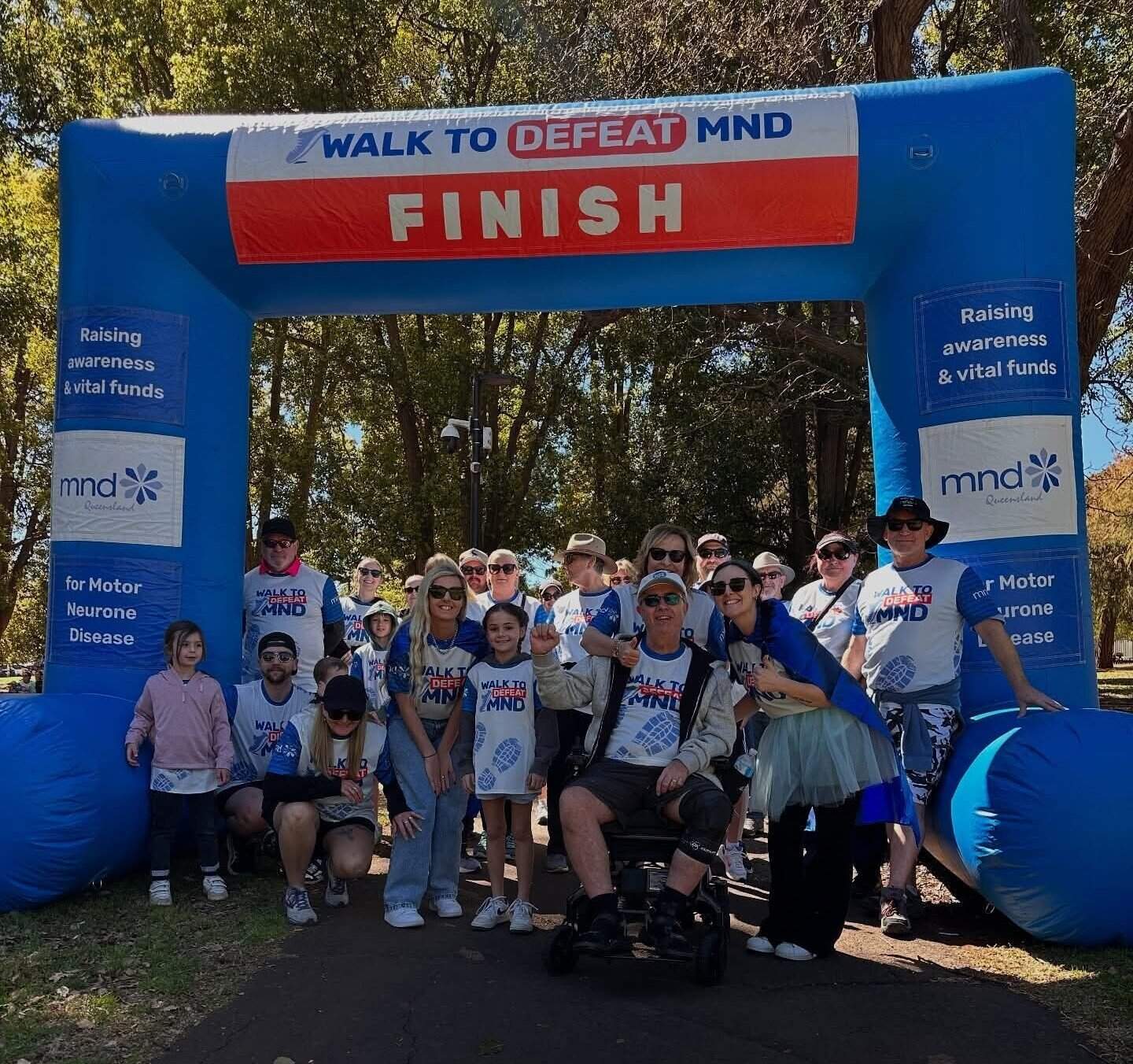
Dean’s story is one of quiet strength, living life in the moment, and a deep commitment to helping others. He credits his family, Michelle, Jade, Amy and grandkids for being his rock through it all.
To those newly diagnosed, Dean offers this heartfelt encouragement: “Take each day as it comes. Don’t worry about what’s ahead. Just live in the now and lean on the people who love you.”
Learn more about neurological clinical trials at Wesley Research Institute.