
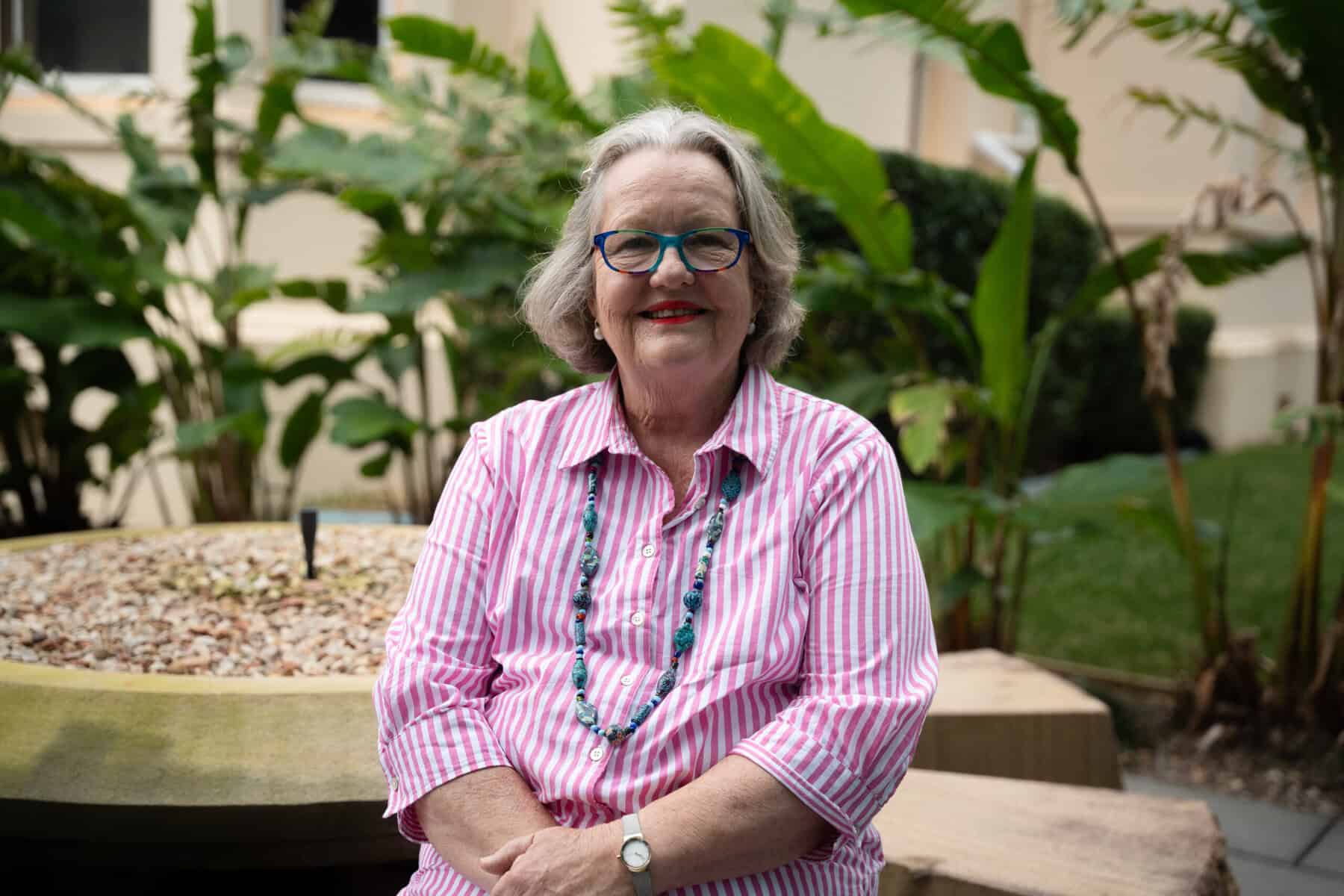
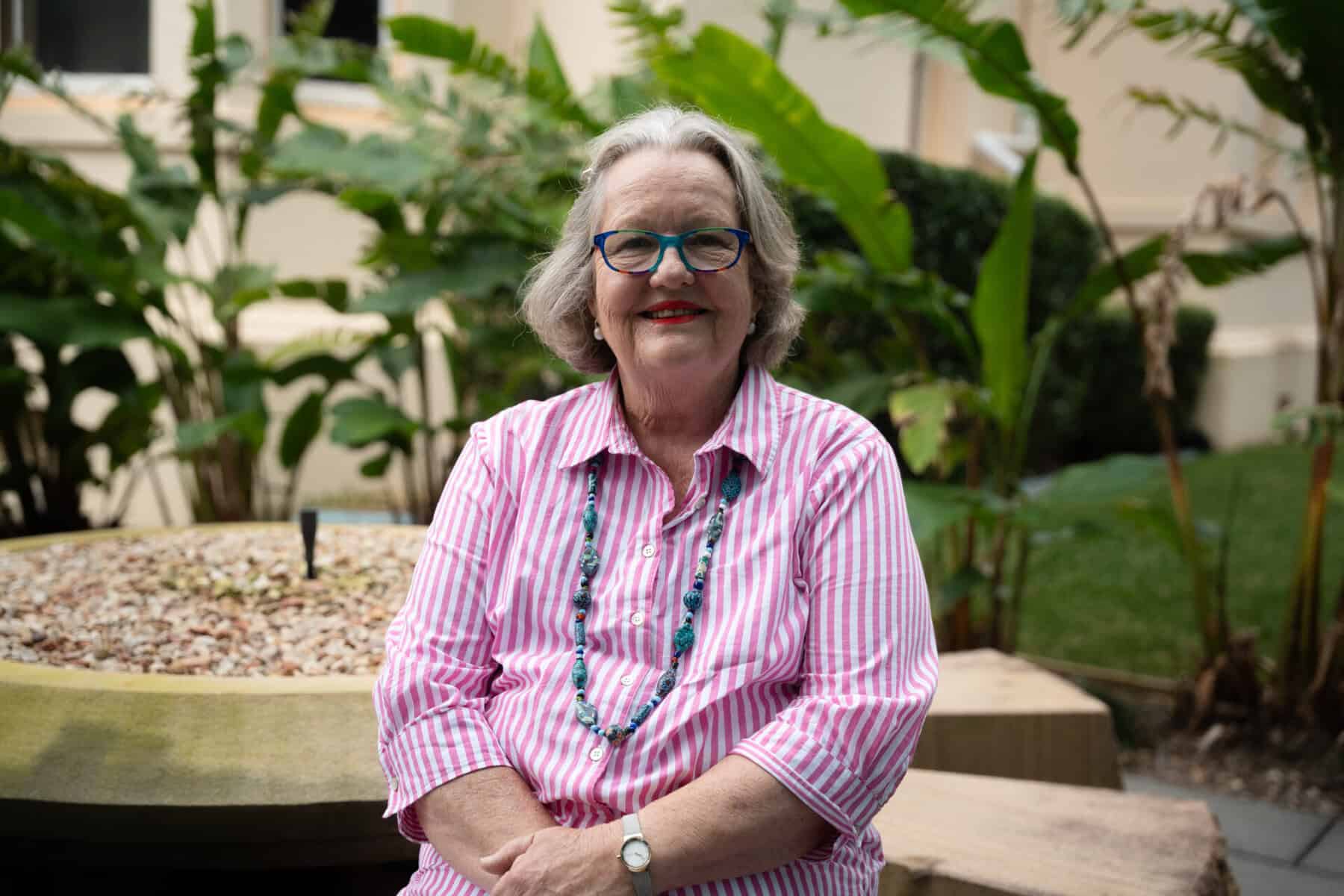
Merran Williams, a 71-year-old from Buderim, Queensland, is an inspiration, full of resilience and hope in the fight against ovarian cancer.
Diagnosed with stage 3B high grade serous ovarian cancer (HGSOC) in 2008 at age 53, Merran’s journey began unexpectedly during a hysterectomy for menopausal bleeding. The cancer had already spread to both ovaries and the peritoneum, thrusting her into a battle that would define her life’s purpose.
“I was lucky to find mine because you don’t think about tummy swelling or aches. Be very in tune with your body and service it like you would a car,” said Merran.
A registered nurse with decades of experience, Merran’s career at the Wesley Hospital included founding the HealthWise centre to support cancer patients. Her expertise and personal journey fuel her advocacy. After enduring six cycles of chemotherapy, two recurrences and a breast cancer diagnosis linked to her BRCA gene mutation, Merran has emerged as a 17-year survivor.
“I’m a 17-year survivor and I’m on a magic drug called olaparib, which targets my BRCA gene. It’s very expensive, but the government subsidises it, and so I’ve survived,” she said.
Yet, her survival stands in stark contrast to others.
“A lot of the women in my support group aren’t here anymore. I had a photo done a few Christmases ago with five of us, and I’m the only one left,” she said.
Merran runs the Sunny Sisters, a 15-year-old gynaecological cancer support group on the Sunshine Coast, offering solace to women navigating similar battles.
Her advocacy extends to consumer representation in studies like OPAL and ALIVEwell, and she creates posters to make complex research accessible. Her 2010 Churchill Fellowship took her to the US to study survivorship clinics, shaping her mission to improve treatments.
“I want to make sure the treatments are better for my family and others. My family is full of this BRCA gene, and I want them to have better options than I had,” she said, driven by her daughter’s cancer research in the US.
The Queensland Spatial Biology Centre’s (QSBC) recent study, led by Associate Professor Arutha Kulasinghe, researcher Naomi Berrell and other leading scientists and clinicians, excites Merran for its potential to revolutionise treatment.
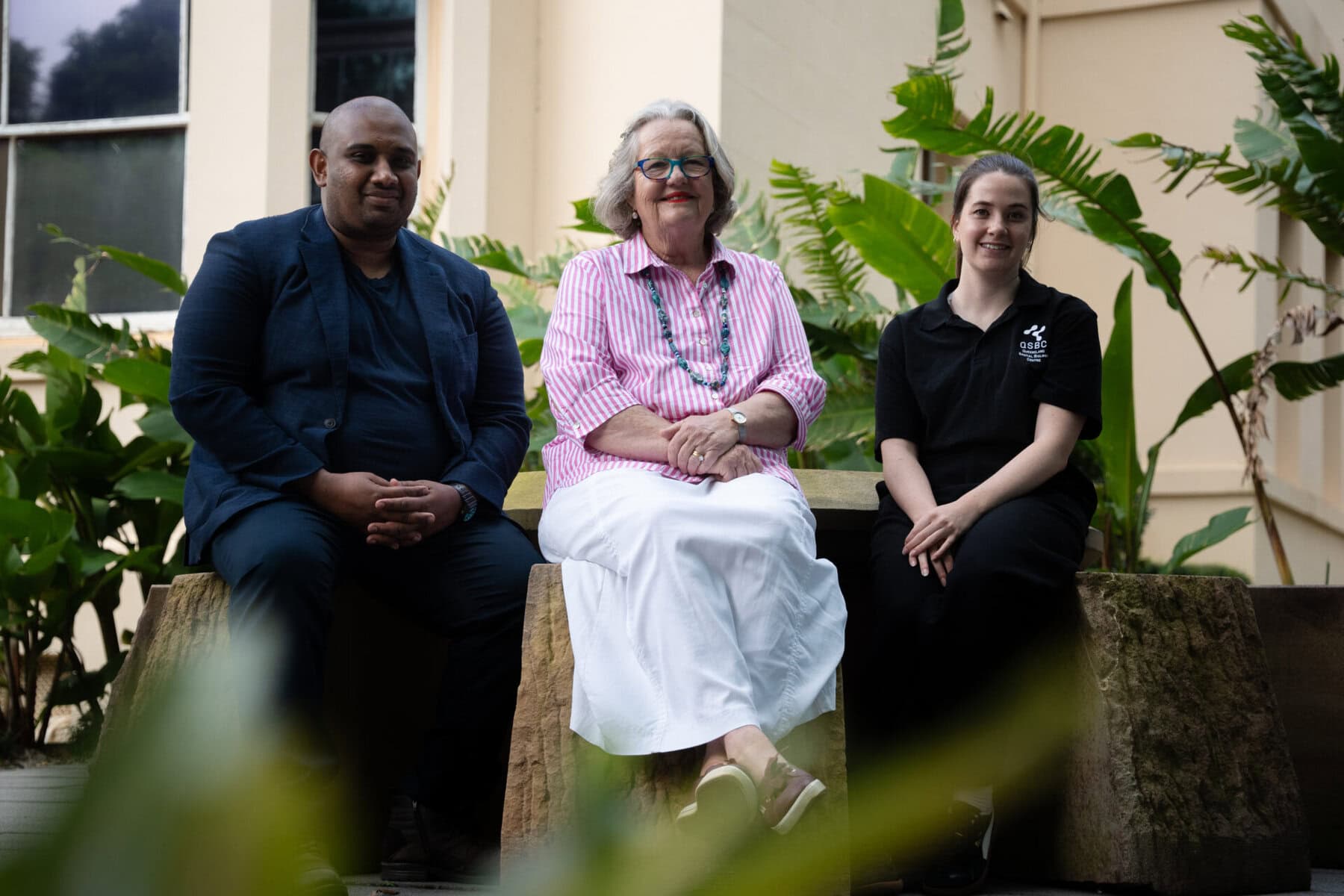
Merran with QSBC researchers Associate Professor Arutha Kulasinghe and Naomi Berrell
By mapping the tumour microenvironment and identifying fighter immune cells (CD66+ and CD8 T-cells), the research offers hope for targeted therapies that spare healthy cells.
With chemo, it’s a scattergun approach – it damages all your cells, your whole body. This research is precise, honing in on the cancer cells in the microenvironment.
Merran
Having endured chemotherapy’s gruelling side effects – hair loss, kidney damage, and flu-like symptoms – Merran sees this as a game-changer.
Her resilience shines through her philosophy.
“As long as I’m strong and making a contribution, it’s good. You’ve got to be a giver, not a taker.”
Now retired, Merran remains busier than ever, reviewing research applications and speaking at events.
My life has never been so interesting. I love working with scientists; their eyes twinkle and they just love what they do.
Merran
Merran urges women to monitor symptoms and family history, advocating for annual check-ups and public support for research through programs like those at Wesley Research Institute, The University of Queensland and the Translational Research Institute.
Merran’s story is one of survival, contribution and hope, amplifying the QSBC’s mission to transform outcomes for the 313,000 women diagnosed with ovarian cancer annually. Her call to action is clear – stay vigilant, support research and believe in a future where treatments are kinder and more effective.
Lived experience matters and passionate advocates like Merran remind us every day that our work is not just about the science or the data, it’s about the people. We thank her for sharing her story.
Learn more about this innovative, life-changing research of the Queensland Spatial Biology Centre.