Coeliac Disease and Immune Health
Coeliac Disease in High-Risk Populations
Research Objectives
Status
Recruitment
Patient Group
Total Participants
Study location
Study type
Lead investigators
- Dr James Daveson
- Dr Anuj Sehgal
About this research project
An estimated 367,000 Australians (1 in 70) have coeliac disease which is caused when an intolerance to gluten in wheat, rye and barley products triggers an autoimmune response that attacks the small intestine. However, only around one in three are diagnosed and most don’t find out until they are at least 30 years old which is often too late to head off permanent health damage. Coeliac disease is a serious autoimmune disease. People with coeliac disease experience a range of intestinal and extraintestinal symptoms that plague them for most of their lives until diagnosis and commencing treatment of gluten free diet.
The Coeliac Disease and Immune Health Research Program (CDIHRP) at Wesley Research Institute is undertaking studies to identify the prevalence of coeliac disease in high-risk populations in Australia as well as actively case-find patients with coeliac disease. Associated with the Wesley Research Institute’s First-Degree Coeliac Screening Clinic, we have already identified that Australian children have 10 time the prevalence of having coeliac disease if their parents or siblings have the autoimmune disorder compared to the general population [1], highlighting the need for early screening and diagnosis for all high-risk patient groups.
High-risk groups for coeliac disease include individuals who may be/be patients of the following conditions:
- Expressing HLA-DQ2 and HLA-DQ8 genes
- First-degree relative (parent, sibling)
- Type 1 diabetes
- Chronic dermatitis herpetiformis
- Down syndrome, William syndrome, or Turner syndrome
- Autoimmune thyroidisms, such as such as Hashimoto’s disease, Graves’ disease, Addison’s disease, and primary hyperparathyroidism
- Rheumatic diseases, such as Sjögren’s syndrome
- Selective immunoglobulin A (IgA) deficiency
Recruitment
We are currently analysing data from the previous cohorts and not currently recruiting for this project.
Updates January 2024
First-degree relative study:
Phase 1 of the FDR study was published in the Medical Journal of Australia in September 2023, where 202 first-degree relatives (children, siblings or parents) of 134 people with coeliac disease were invited to undergo screening. Of the 202 participants, 62 were under 18 years of age and 140 were 18 years of age or older. Our findings revealed an estimated prevalence of coeliac disease of 11% for biopsy-confirmed disease in children and 1.4% in adults, as well as a prevalence of 14% for children with coeliac disease susceptibility haplotypes. These data highlight an unmet need for early screening and diagnosis of children in Australia.
ANZSRC Socio-Economic Objectives (SEO)*
- 200101 Diagnosis of human diseases and conditions
- 280112 Expanding knowledge in the health sciences
ANZSRC Field of Research (FoR)*
- 420310 Health surveillance
- 420603 Health promotion
Publications
[1]Muir R, Sehgal A, Tye-Din JA, Daveson AJM. Undiagnosed coeliac disease identified by active case finding in first degree relatives of people with coeliac disease in Australia: a prospective observational study. Med J Aust. 2023 Oct 16;219(8):371-373. doi: 10.5694/mja2.52105. Epub 2023 Sep 16. PMID: 37716708.
https://onlinelibrary.wiley.com/doi/10.5694/mja2.52105
Latest News
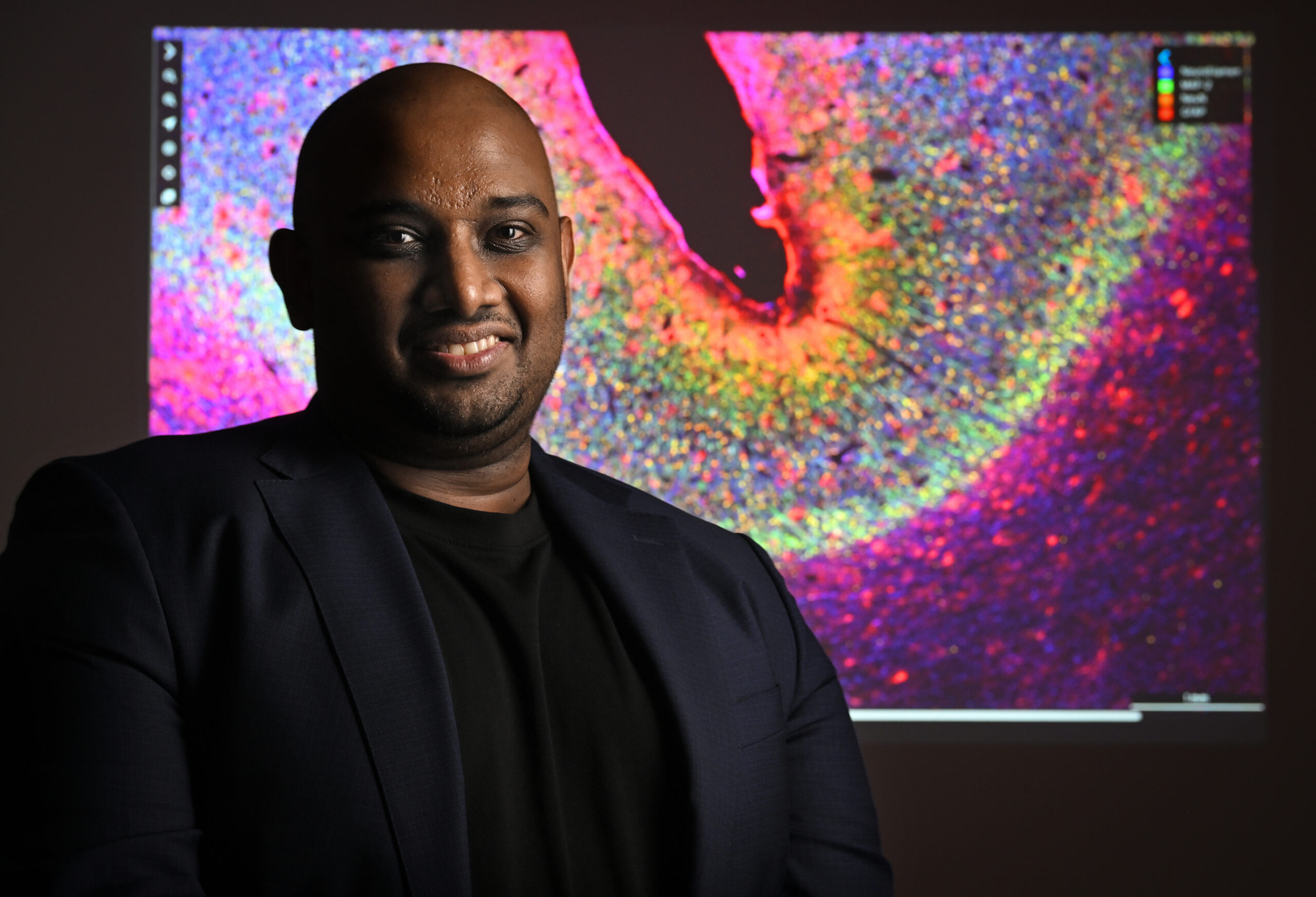
Research Australia Award Winner – Associate Professor Arutha Kulasinghe

Coeliac Disease Myths vs Facts